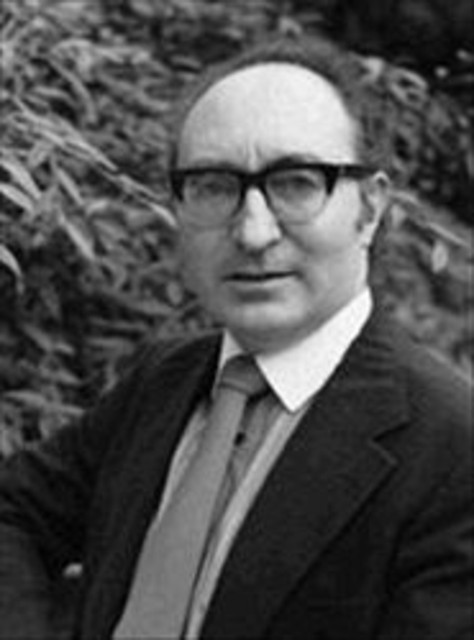
William Mathias
Charts
Tracks
Playlists
SEO
Press Mentions
Overview
Not included in any known risky playlists
Monthly Listeners
Discography
Top Audiences
Top Listener Locations
 London, GB134
 Lagos, NG24
 Sydney, AU24Birmingham, GB22
 New York City, US21
Playlist Summary
Playlist Movement
No activity found
This artist's playlist additions and removals will appear here.
Biography & Metadata
Welsh composer William Mathias only lived to be 57 years old, but composed a large amount of work. Much of it is not considered to be great work; however, some of it is excellent, and Mathias has been deemed as one of the great Welsh composers. Mathias wrote in different styles, but there is a slight Welsh flavor throughout his pieces. Some of his influences were Stravinsky, Bartok, Tippett, and Gershwin, hardly known as Welsh-style composers. Music ran in the family and was encouraged. Son of James Mathias and Marian, a piano teacher and organist, his maternal grandfather was also an amateur conductor. William learned to play piano at an early age, taking lessons from, at first, his mother; then, at the age of six, he began to study with David Lloyd Phillips of Llanfyrnach, Pembrokeshire. William had already begun, at this early stage of life, to improvise at the piano. His teacher encouraged this, while also teaching him the foundations of piano playing and theory. Later, Mathias would dedicate a piano sonata to his first teacher. Mathias attended Whitland Grammar School, where his father taught history. Here he wrote works of all kinds, some of which are still performed today. He even composed the school song. However, his major introduction to classical music, since he did not live in an setting exceptionally full of cultural activity, was the radio, particularly the BBC. In 1952, Mathias attended University College at Aberystwyth as an undergraduate. Many of his earlier compositions were heard and written here; and because of the strict class deadlines, Mathias gained ease in writing prolifically. Mathias chose to create his own style by composing in a "recessive" mode. This meant that instead of gradually climbing toward the climax of a piece, he would compel the music away from it. In this way, his music was lively, but not overbearing. Mathias graduated in 1956. Because of his outstanding musical work at the University, William Mathias gained a scholarship to the prestigious Royal Academy of Music in London. He studied piano with Peter Katin (b. 1930), and composition with Sir Lennox Berkeley (1903 - 1989), himself a former student of Nadia Boulanger, and a friend of Stravinsky and Poulenc. These influences would transfer through Berkeley to Mathias in his own compositions, although he always thought of himself more of a Classical composer than a Modern composer. He did not consider himself an avant-garde composer, even though that seemed to be the strategy of his peers. However, he would vary his style within his own genre. He loved Mozart, yet emulated Shostakovich, and admired Michael Tippett (1905 - 1998). In 1959, Mathias began teaching at University College in Bangor, where he remained (except for one year teaching at Edinburgh) until his retirement in 1988. It was in Bangor that he wrote many works and became well-known to the public, beginning with his Second Piano Concerto, first performed in 1960. Later, Mathias composed some of his more significant works, including the Celtic Dances and the Harp Concerto. Other works include his Lux Aeterna, first performed in 1982, and other choral music, plus chamber music, his Third Piano Concerto, Symphony No. 2 (Summer Music), and also an opera, The Servants. In 1981, an anthem of his was played at Charles and Diana's wedding at St. Paul's Cathedral, and heard by millions of people throughout the world.
First discovered Sep 14, 2026, 4:27 AM