Eric Ewazen
Charts
Tracks
Playlists
Press Mentions
Google Rankings
Overview
Not included in any known risky playlists
Monthly Listeners
4,631 – 4,934
Discography
Top Audiences
Top Listener Locations
 Dallas, US68Chicago, US65Houston, US56New York City, US55Los Angeles, US48
Playlist Summary
Playlist Movement
Event | Playlist | Botted? | Position | Track | Happened at | |
|---|---|---|---|---|---|---|
Biography & Metadata
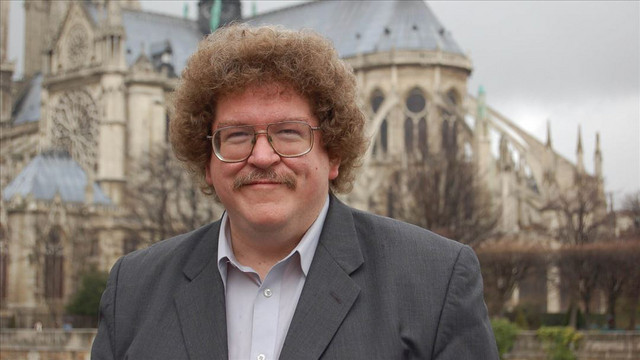
Eric Ewazen is an important American composer active in the late 20th and early 21st centuries. He has demonstrated considerable versatility in his output, producing orchestral, piano, vocal, chamber, and various other works. He has favored brass and wind instruments in many of his compositions, however, and exhibits a unique style often tinged with the spirit of Copland, Creston, and other iconic American composers, and a melodic facility one critic compared to Prokofiev's, not that there is anything particularly Russian about his music. In 2024, his Three Rivers Trios lent its name to an album of chamber music by hornist William Caballero, oboist Cynthia Koledo DeAlmeida, and pianist Rodrigo Ojeda. Ewazen was born in Cleveland on March 1, 1954. He began playing piano in his youth and played cello and double bass in middle and high school ensembles. With a growing interest in composing and encouragement from his high school music staff, Ewazen enrolled at the Eastman School of Music in 1972 and, after graduating, went on to Juilliard, where he earned a doctorate. Among his teachers were Milton Babbitt, Joseph Schwantner, Samuel Adler, and Gunther Schuller. He was active in composition even in his student years, turning out such works as Dagon for five cellos (1973), Psalm 90 for baritone, horn, and piano (1977), and Kronos for brass quintet and tympani (1979). After receiving a BMI Award for Dagon, Ewazen continued with a string of composition prizes, including the Louis Lane Prize (1974) and Howard Hanson Prize (1976). Ewazen joined the pre-college division faculty at Juilliard in 1980; he joined the college division in 1982 and remained there as of the mid-2020s. He remained active in composition with highly successful works like the Colchester Fantasy for brass quintet and Ballade for clarinet, harp, and strings, both from 1987 and the Native American-inspired 1996 work Shadowcatcher for brass quintet and orchestra, regarded by many critics as one of his finest compositions. From the '80s onward, Ewazen extended his ties to education and to actively promoting serious music in general by accepting numerous invitations to appear at universities in the U.S. and abroad, including Curtis, Peabody, Boston Conservatory, the Santa Cruz Conservatory, and the Birmingham Conservatory in England. Since 1992, Ewazen has been a lecturer for the New York Philharmonic's Musical Encounters program. Ewazen has garnered numerous prestigious commissions in the new century, including a pair on patriotic subjects: Legacy (2000), for the Bi-Centennial of West Point, and Flight (2001), for the U.S. Air Force Band in Langley, Virginia. His output has remained constant, and his works have increasingly been included on recordings such as Summit Brass Live (2003), which included his Symphony in Brass (1991) that has been featured as theme music for NPR; Marya Martin Plays Eric Ewazen (2011); and Three Rivers Trios (2024) by hornist William Caballero, oboist Cynthia Koledo DeAlmeida, and pianist Rodrigo Ojeda. ~ Robert Cummings, Rovi
First discovered Nov 3, 2026, 8:36 AM