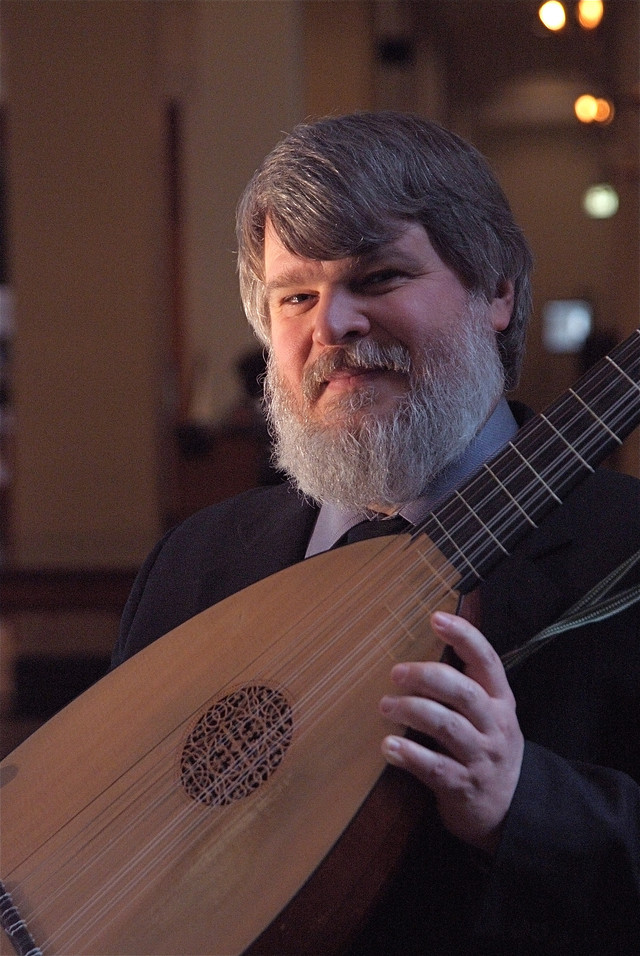
Paul O'Dette
Charts
Tracks
Playlists
SEO
Press Mentions
Overview
Not included in any known risky playlists
Monthly Listeners
Discography
Genres
Spotify has not assigned genres to this artist yet
Top Audiences
Top Listener Locations
 Mexico City, MX827
 London, GB726
 Madrid, ES684
 Santiago, CL560
 São Paulo, BR457
Playlist Summary
Playlist Movement
No activity found
This artist's playlist additions and removals will appear here.
Biography & Metadata
Few instrumentalists establish themselves with such firm authority as Paul O'Dette has on the lute. In fact, O'Dette helped define the technical and stylistic standards to which 21st century performers of early music aspire. In doing so, he helped infuse the performance practice movement with a perfect combination of historical awareness, idiomatic accuracy, and ambitious self-expression. "I remember when I first started playing the lute," O'Dette once recalled, "the common perception of Renaissance music was that it was kind of pre-expression -- that people didn't use dynamics, they didn't use tone colors... [But] the more we've learned, we've realized that in fact all of these expressive devices were being used throughout the 16th century." O'Dette deserves much of the credit for bringing this aspect of early music to the fore of performance practice. O'Dette was born on February 2, 1954, in Pittsburgh, Pennsylvania. His musical career began when he played electric guitar in a rock band. Frustrated with the lack of pedagogical consensus within the rock guitar world, and seeking a higher level of technical rigor and discipline, O'Dette took a friend's advice and sought out instruction from a classical guitar teacher to improve his playing. His first assignment under his new teacher was to learn some Renaissance lute pieces arranged for guitar. He was immediately transfixed by the sonorities of the Renaissance and sought out recordings of the music on authentic instruments. Over the next few decades, O'Dette's collection expanded to include over 20 instruments, including a lute, an archlute, a chitarrone, and a Baroque guitar. He studied early music at the Schola Cantorum Basiliensis, performance practice of medieval and Renaissance music with Thomas Binkley and Studio der frühen Musik, lute with Eugen Dombois, and guitar with Christopher Parkening and Michael Lorimer. In 1976, O'Dette became director of early music at the Eastman School of Music. He has appeared on over 100 recordings, both as a featured performer and with such prestigious company as Nigel Rogers, Christopher Hogwood, Jordi Savall, Trevor Pinnock, and Gustav Leonhardt. He has recorded for several labels, including Harmonia Mundi, CPO, EMI Classics, and Hyperion. Among his accolades are several nominations for Record of the Year for his highly respected 1995 recording of John Dowland's complete works for lute, and his 1996 release of Purcell songs, a collaboration with Sylvia McNair, won a Grammy. He has been nominated for seven Grammy awards, including a Best Opera Recording win in 2014 for Charpentier: La Descente d'Orphée aux Enfers, and another Best Opera Recording nomination in 2019 for Charpentier: Les Arts Florissants; Les Plaisirs de Versailles. In 2020, O'Dette joined Stephen Stubbs to lead the Boston Early Music Festival Orchestra in a CPO release of Handel's Almira. Perhaps O'Dette's style can be described as deeply human. Crucial to his sound is his awareness of the ethnic and dance topics that figure into the music. The dance gestures that correspond -- albeit sometimes only in a stylized way -- to the musical figures, find expression in the contour and phrasing of O'Dette's lines. He makes another enlightening comparison, as well, one based on writings contemporaneous to the music: "All of the 16th century sources say that the best instrumentalists are those who can make you believe you are listening to words -- that the best instrumental playing strives to imitate the voice in every way possible." This appealing (and historically informed) philosophy of performance, and O'Dette's impeccable technique, have made his practice of early music a creative, rather than a curatorial, endeavor.
First discovered Aug 26, 2026, 8:39 AM