Samuel Ramey
Charts
Tracks
Playlists
Press Mentions
Google Rankings
Overview
Not included in any known risky playlists
Monthly Listeners
Discography
Genres
Spotify has not assigned genres to this artist yet
Top Audiences
Top Listener Locations
 London, GB2,318
 Madrid, ES1,290
 Chicago, US1,036New York City, US982
 Mexico City, MX975
Playlist Summary
Playlist Movement
Event | Playlist | Botted? | Position | Track | Happened at | |
|---|---|---|---|---|---|---|
Biography & Metadata
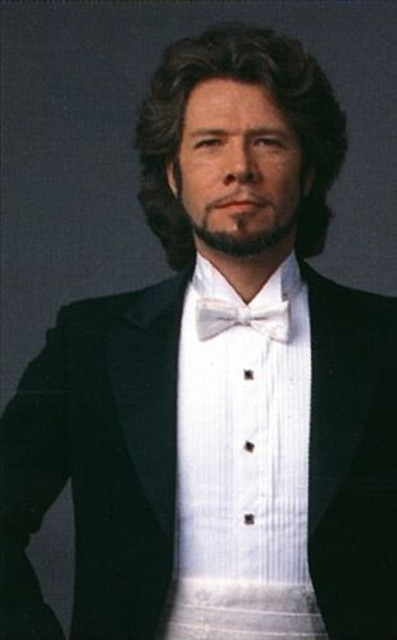
Basses are not typically the superstars of the operatic world, but Samuel Ramey is an exception to that rule. Though his voice does not have the sonority of a Nicolai Ghiaurov or a Boris Christoff, his instrument is remarkable for its easy flexibility -- dealing effortlessly with long runs, ornaments, and leaps -- and its brilliant intensity. His stage presence (particularly when portraying "devil" figures) is vivid and lively, aided by an attractive physique and a dancer-like grace. He and the various stage directors have tended to emphasize these aspects, giving rise to the comment that "Ramey's Mefistofele has everything one could desire, except possibly a shirt." While he was attending Kansas State University, Ramey's interest in operatic music was awakened when a friend suggested that he audition for a summer program at Colorado's Central City Opera. He was accepted and got to sing in the chorus for two productions. Soon after, he began to study avidly, first at Wichita State University and later in New York with Armen Boyajian; he made his professional debut in 1973 as Zuniga in Bizet's Carmen at the New York City Opera. His Glyndebourne debut was in 1976 as Figaro in Mozart's Le nozze di Figaro. A 1980 performance of Rossini's Semiramide at Aix-en-Provence, opposite Monserrat Caballé and Marilyn Horne, made him an overnight sensation. For critics and audience alike, this new bass with the ideal power and agility was a welcome surprise. His La Scala debut came the next year as Mozart's Figaro, followed by his Covent Garden debut in 1982, in the same role. In 1984, he made his Metropolitan debut as Argante in Rinaldo. He has been a regular at the Pesaro Rossini Festival. Many Rossini bass roles had become "character parts" over the years -- performed more in parlando than actually sung (partly for comedy, partly because of the extreme difficulty of the roles) -- and Ramey determined to sing these as written. His instinctive gift for comedy without clownishness has served him well in these parts, as well as in his various diabolical roles, most of which contain a good deal of sardonic humor. He performs arias from his darker roles in his "Date with the Devil" concerts. Later in his career, as his voice became darker and weightier, Ramey slowly began to drop the florid Rossini and Handel roles in favor of the heavier Verdi roles, such as King Philip in Don Carlo, Fiesco in Simon Boccanegra, and even Mussorgsky's Boris Godunov. He has also performed twentieth century repertoire widely, especially noted for his Reverend Olin Blitch in Floyd's Susannah and Nick Shadow in Stravinsky's The Rake's Progress. Ramey is the most recorded bass in history, with dozens of recordings to his credit. These range from nearly all of his operatic roles to solo recordings of arias and song, and even some musical theater. He has appeared on the TV series Live from Lincoln Center and in TV and video recordings of many of his roles.
First discovered Aug 24, 2026, 10:00 AM