Friedrich Kuhlau
Charts
Tracks
Playlists
Press Mentions
Google Rankings
Overview
Not included in any known risky playlists
Monthly Listeners
Discography
Top Audiences
Top Listener Locations
 Mexico City, MX1,137
 Lima, PE439
 Bogotá, CO431
 Santiago, CL399
 Singapore, SG367
Playlist Summary
Playlist Movement
Event | Playlist | Botted? | Position | Track | Happened at | |
|---|---|---|---|---|---|---|
Biography & Metadata
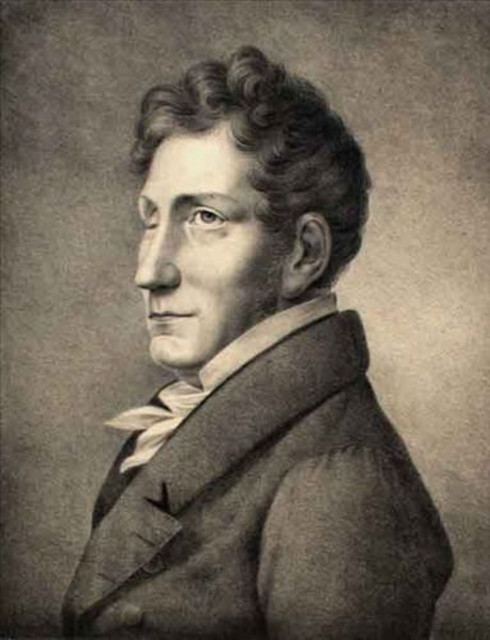
Friedrich Kuhlau is generally remembered for his piano music, particularly because of its pedagogical value. His sonatas and sonatinas are not difficult and offer musical an excellent training ground for the more challenging works of Beethoven. Yet his music can also stand on its own, as his Piano Concerto in C, from 1810, and many other solo keyboard works amply demonstrate. While the concerto is not on the level with Beethoven's last three, it is a composition of considerable artistic merit. His flute works are also of generally high quality, featuring fine writing that demonstrates a grasp of the instrument's expressive range. Kuhlau wrote operas and other dramatic works, most of which are finely crafted; the best of them fully on the level of his piano music. Friedrich Kuhlau was born in the North German town of Uelzen, near Hannover. His father was a musician in a military band, and of necessity often had to relocate his family. After moving to Lüneburg when he was seven, Friedrich slipped on ice in the street and sustained an injury to his right eye, causing blindness in that eye for life. At 14, he finished his schooling in Brunswick at the Katharineum-gymnasium, and having shown unusual musical talent throughout his childhood, he began composition studies in Hamburg with Schwenke. Over the next several years, Kuhlau composed some songs and chamber music, and in 1804 began regularly appearing as a concert pianist. Many of his works at this time and throughout his whole career were written for flute, and for years it was believed that Kuhlau was himself a fine flutist. He could not play the instrument, however, but wrote works for it to earn money. In 1810, Kuhlau traveled to Copenhagen to flee the invading troops of Napoleon. He had completed his Piano Concerto earlier that year and his performances of it helped him obtain an appointment as a non-salaried musician in the Danish Court in 1812. He supported himself by giving recitals and teaching music. Two years later, he wrote the score for the singspiel The Robber's Castle, which was a huge success. Around this time, his parents and younger sister joined him, all of whom he had to support. After taking a high-paying post as singing teacher at the Royal Theater in the years 1816-1817, Kuhlau left it, eventually obtaining another with the Court, which required him to compose works occasionally. One of them would be his opera The Magic Harp, which was a failure owing mainly to its controversial libretto. His next opera, Elisa (1820), fared as poorly. Kuhlau traveled to Vienna in 1821 (for four months) and in 1825, at which time he befriended Beethoven. The year before, his opera Lulu had premiered in Hamburg with great success. After returning to Copenhagen, Kuhlau wrote the incidental music to Boye's play, William Shakespeare, and scored another success. Still supporting his parents, he worked diligently, turning out another opera in 1827, Hugo and Adelheid, which failed. In 1828, Kuhlau was given an honorary professorship that yielded substantial remuneration for him. The same year saw the premiere of his The Elf's Hill, a singspiel that was a huge success. A series of tragedies ensued: Kuhlau lost both parents in 1830, and the following year his house burned down, the composer suffering a resultant chest ailment that afflicted him until his death.
First discovered Sep 17, 2026, 11:23 AM