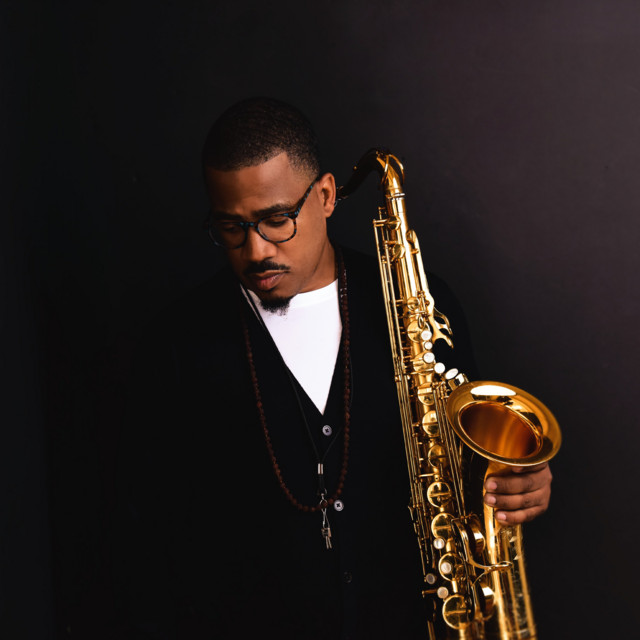
James Brandon Lewis
Charts
Tracks
Playlists
SEO
Press Mentions
Overview
Not included in any known risky playlists
Monthly Listeners
Discography
Top Audiences
Top Listener Locations
 New York City, US196
 London, GB191Chicago, US188Brooklyn, US163
 Warsaw, PL155
Playlist Summary
Playlist Movement
No activity found
This artist's playlist additions and removals will appear here.
Biography & Metadata
Apple Cores is the latest full-length album from New York tenor saxophonist James Brandon Lewis, “one of the fiercest sounds in jazz today” (The Guardian) with a “penchant for unbound exploration” (Pitchfork). Informed by the rhythms and textures of hip-hop and funk while remaining rooted in jazz, James Brandon Lewis Trio’s Apple Cores was recorded with Chad Taylor (drums/mbira) and Josh Werner (bass/guitar). The recording was a collective compositional process that happened over the course of two intense, entirely improvised sessions. “If you don’t spend time with your band, you’re not going to really trust that moment,” Lewis says. “I think we’ve spent enough time together to where we can do that. I’ve been playing Chad for like 10 years, so that’s like water right there and me and Josh have been playing together since like 2018.” The album takes its name and intention from the column that poet and jazz theorist Amiri Baraka wrote for DownBeat in the 1960s. “I was first exposed to Amiri Baraka at Howard University [also Baraka’s alma mater],” says Lewis. “Blues People [Baraka’s groundbreaking 1963 study of Black American music], was required reading. I’m always in constant dialogue with his work.”
First discovered Feb 20, 2026, 10:26 PM