Carlo Tagliabue
Charts
Tracks
Playlists
Press Mentions
Google Rankings
Overview
Not included in any known risky playlists
Monthly Listeners
Series
- Monthly Listeners
- Listeners from Playlists
- Change
Discography
Top Audiences
Top Listener Locations
 Athens, GR11
 New York City, US8
 Berlin, DE6
 Mexico City, MX5
 Vienna, AT4
Playlist Summary
Playlist Movement
Biography & Metadata
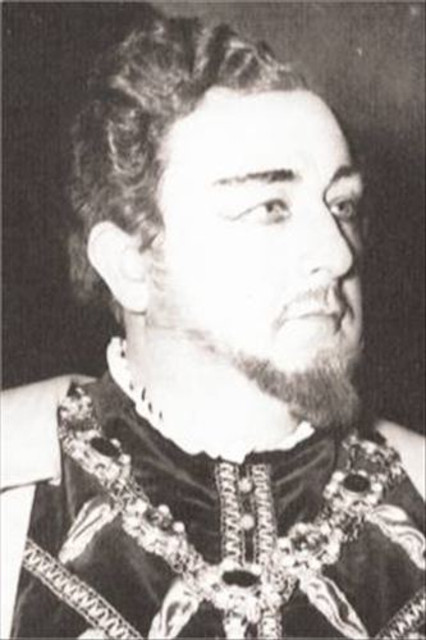
A bullish singer of considerable power, Carlo Tagliabue was a leading figure among Italian baritone of the late '30s, the 1940s, and 1950s. Despite the privations brought about by WWII, his career continued at its zenith when he was in his fifties. Many of his recordings were made at that time. After studies in Milan with Gennai and Guidotti, Tagliabue made his stage debut at Lodi in 1922 as Amonasro. Further engagements with provincial companies in Palermo, Florence, Genoa, Verona, and, subsequently, Lisbon, led to his joining La Scala in 1930. He remained with that company for the next two decades. In 1934, he was entrusted with the role of Basilio in the world premiere of Respighi's La Fiamma. That same year he appeared in Buenos Aires. From 1937 to 1939 he sang at New York's Metropolitan Opera; in 1938, he appeared at San Francisco and in London. At the Metropolitan, his Iago was found rough in tone, but theatrically vivid. In other roles, such as Rigoletto, Germont, di Luna, and Marcello, he was felt lacking in suavity, but, as Alfio, he was recognized as near ideal. When San Francisco heard him as Alfio, Tagliabue was described by critic Marjory Fisher as "a commanding stage presence and a rugged baritone of excellent quality." Tagliabue's other roles during his only season there were Marcello, Rossini's Figaro, and Don Carlo in La forza del destino. London's Covent Garden heard from him a "good routine Rigoletto" in 1938. When he reappeared in London in 1946, it was with the San Carlo company from Naples and this time critics praised his "fine tone" in Rigoletto and described his Germont as "distinguished." A final London appearance at the Stoll Theatre in 1953 offered to audiences a Don Carlo described as stylish and dramatic. Among his recordings, Tagliabue left a number of impressive arias, now collected on two Preiser discs. He recorded Don Carlo (something of a signature role) twice; first with Marinuzzi and a still-unsurpassed cast in 1941 and again in 1954 under Tullio Serafin. Powerfully incisive in the first recording, he is less firm in the second, but strong nonetheless. Tagliabue retired to teach in 1958.
First discovered Oct 23, 2026, 5:04 PM