Sequentia
Charts
Tracks
Playlists
Press Mentions
Google Rankings
Overview
Not included in any known risky playlists
Monthly Listeners
Series
- Monthly Listeners
- Listeners from Playlists
- Change
Discography
Genres
Spotify has not assigned genres to this artist yet
Top Audiences
Top Listener Locations
 London, GB475
 Madrid, ES373
 Paris, FR273
 Berlin, DE269
 Amsterdam, NL264
Playlist Summary
Playlist Movement
Biography & Metadata
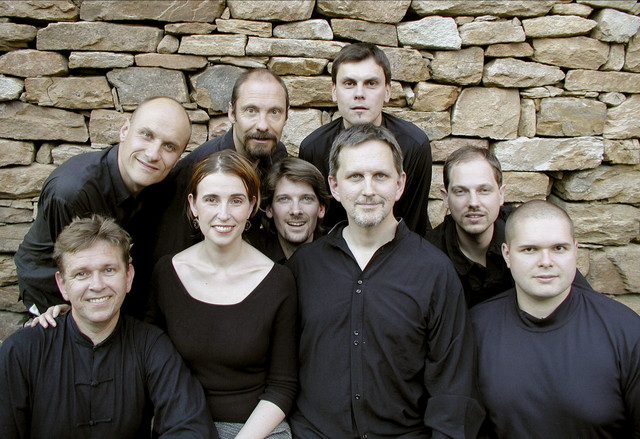
An interest in Medieval music shared by two graduate students at the Schola Cantorum Basiliensis in Switzerland was the foundation for one of the most successful and innovative early music performing ensembles of the twentieth century. Benjamin Bagby and Barbara Thornton met in 1974 and formed the ensemble Sequentia in 1977, naming the group after the sequence, a central poetic and musical form of the High Middle Ages. Sequentia has grown into a touring and recording phenomenon, with over 20 albums to date, films for both television and independent filmmakers, tours to six continents, and awards including the International CD Prize Frankfurt, the Deutsche Shallplattenpreis, the Edison Prize (Netherlands), a Disque D'or (France), a Grammy Awards nomination, and the Innsbruck Radio Prize. The versatile ensemble, initially based in Cologne, Germany, continues its established pattern of innovative research, creative programming, and sheer musical virtuosity, seeking to bring to life various musical traditions of tenth- to fourteenth century Europe. In 2002, the group re-located its base of operations to Paris. The lineup of Sequentia changes according to the needs of each particular program. The core consisted of singer and harpist Benjamin Bagby, and singer Barbara Thornton until Thornton's untimely death in 1998; other core members have included medieval fiddlers Margriet Tindemans and Elizabeth Gaver, and singer Suzanne Norin. Groups of singers, most of them international soloists in their own right, comprise Vox Feminae and Sons of Thunder, the women's and men's ensembles of Sequentia. These two sub-groups meet intensively each year in Cologne and Boston, leading workshops and preparing for the current tour/recording project. Since their inception, Sequentia has incorporated instrumental performance, including a panoply of handcrafted replicas of stringed instruments appropriate to their repertoire. Among the many musical repertoires brought to life by Sequentia is that of Hildegard of Bingen, who they have consistently featured. Along with Christopher Page's ensemble Gothic Voices, Sequentia can take credit for the resurgence of interest in Hildegard's music, beginning with their 1982 recording of her passionate morality play, the Ordo Virtutem. More recently, Sequentia produced a series of recordings encompassing Hildegard's complete works, culminating in a new production of Ordo Virtutem in 1998, the 900th anniversary of her birth. Other repertories in their catalog include the music of Philipe de Vitry, a series of Medieval Spanish music, and a reclamation of Medieval Nordic music, including the Icelandic Edda cycles and Benjamin Bagby's solo recitation of Beowulf, and The Rheingold Curse, based on the Icelandic Edda. A recurring motif is their focus on the oral tradition underlying the music they approach; this leads to a stress on texts, linguistics, original notation, and improvisation within understood guidelines. Each project begins with thorough and often creative scholarship, covering all aspects of linguistics, notation, musical analysis, and performance practices. For example, the Edda project began with Bagby's intensive study of the medieval Icelandic texts as well as current methods of Icelandic folk epic recitation, and research by Gaver into the Hardinger-fiddle tradition. At all times, their goal has been to reach and deeply internalize a contemporary understanding of the modal character of the repertoire, seeing melodies more as constellations of orally-transmitted modal gestures than as linear events. This internalization informs Sequentia's vocal performance, and, more importantly, the character of their instrumental improvisations. The ensemble is known for its characteristic full-voiced, open-throated singing, with evocative shaping of the texts.
First discovered Aug 18, 2026, 5:23 PM