Antonietta Stella
Charts
Tracks
Playlists
Press Mentions
Google Rankings
Overview
Not included in any known risky playlists
Monthly Listeners
Discography
Genres
Spotify has not assigned genres to this artist yet
Top Audiences
Top Listener Locations
 Milan, IT15
 Mexico City, MX10
 Vienna, AT10
 Munich, DE10Berlin, DE9
Playlist Summary
Playlist Movement
Event | Playlist | Botted? | Position | Track | Happened at | |
|---|---|---|---|---|---|---|
Biography & Metadata
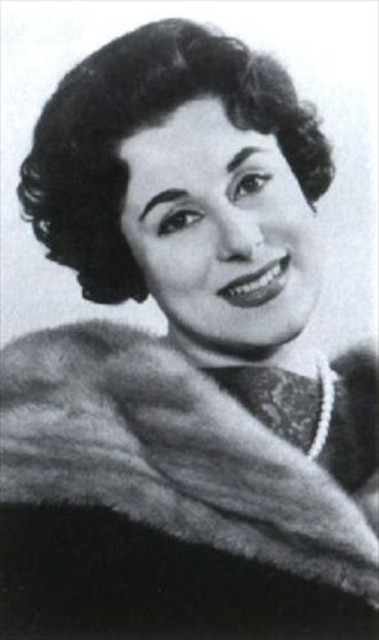
Seeming from time to time a serious contender for consideration with the great prima donnas of her time -- Callas, Tebaldi, and Milanov -- Antonietta Stella never quite pulled together all the elements of her lavish gift. An immensely attractive woman with large, deep-set eyes and a figure that would have found favor in Hollywood, she presented an appealing stage presence but was not always able to control her impulsive histrionic inclinations. Although her vocal endowment led her to an early debut, her lovely spinto-weight soprano was not sufficiently technically secure and not supported consistently enough to endure. By her mid-teens, Stella had determined she would become a professional singer and began her vocal training. After studies in her native Perugia, and later in Rome, she won first prize in the 1949 Bologna Concorso. In 1950, she made a pre-professional appearance on-stage at Spoleto's Sperimentale and followed that in 1951 with her official debut at the Rome Opera singing Leonora in La forza del destino. A recording of Simon Boccanegra shortly thereafter revealed both a promising voice and some ungainly phrasing. Nonetheless, she was entrusted with the role of Lavinia in the world premiere of Guido Guerrini's Enea, mounted by the Rome Opera in 1953. Italy welcomed the young soprano, despite her lack of experience. Engagements took her to many of the country's most prominent theaters, foremost among them La Scala, where she sang Desdemona in 1954 just a year after she had won good reviews in Florence for her performance in Verdi's Aroldo. Several of the lighter Wagner roles also came her way with such parts as Elsa and Elisabeth and (less suitably) Sieglinde and Senta. The world beyond welcomed her as well: she was introduced as Aida at Covent Garden in 1955 and at the Teatro Colón in 1956. Stella became a popular presence in several German houses and won appreciative reviews in Spain and Brazil. In the latter country, however, she failed quite spectacularly in attempting Bellini's Norma in 1956. Ill-prepared, she had neither the technique nor the experience to meet the challenges of the long and fatiguing role. Thereafter, she stayed clear of it. Having recovered from her bad turn with Norma, Stella made her Metropolitan Opera debut on November 13, 1956, essaying Aida. Although she was in good voice, reviews held numerous caveats about her artistry and questions about her willingness to look past the approval of the gallery toward a deeper exploration of text and music. During four seasons, Stella sang more than 50 performances of eight different roles, including Tosca, Butterfly (a memorable interpretation), Violetta, Elisabeth de Valois, Amelia in Un ballo in maschera and Il Trovatore Leonora. Several ill-advised cancellations put an effective stop to Stella's American career. First, she exited a series of performances for Lirica Italiana in Japan. In 1957, she canceled her debut with the San Francisco Opera. After the soprano presented the Metropolitan Opera with a doctor's certificate in 1960 asking for release (granted) for the company's spring tour and then showed up on the stage of La Scala during the period in question, Rudolf Bing filed breach of contract charges with the American Guild of Musical Artists. The action resulted in her suspension. Stella continued to appear in Europe, but decline was evident before she had reached the age of 40. Antonietta Stella died on February 23, 2022 in Rome, Italy at the age of 90.
First discovered Oct 8, 2026, 12:55 AM