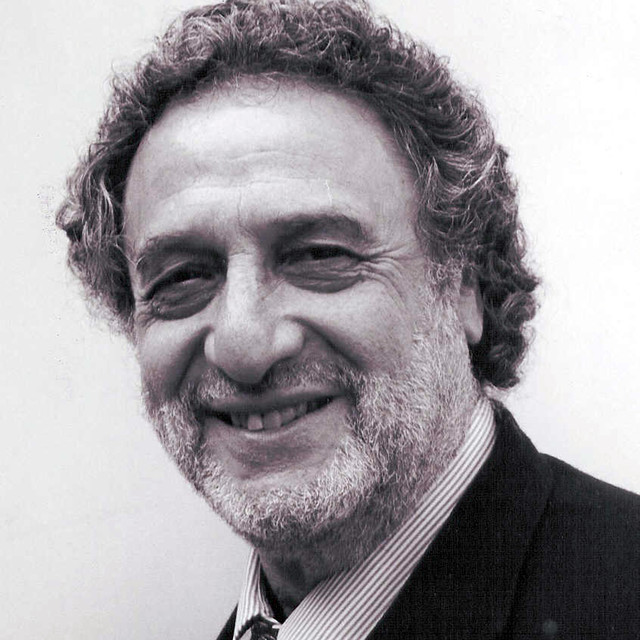
Luis Bacalov
Charts
Tracks
Playlists
SEO
Press Mentions
Overview
Not included in any known risky playlists
Monthly Listeners
Discography
Genres
Spotify has not assigned genres to this artist yet
Top Audiences
Top Listener Locations
 London, GB4,729
 São Paulo, BR4,218
 Santiago, CL4,013
 Mexico City, MX3,925
 Madrid, ES3,619
Playlist Summary
Playlist Movement
No activity found
This artist's playlist additions and removals will appear here.
Biography & Metadata
When Luis Enrique Bacalov received an Academy Award for his musical score for the film The Postman in 1995, it marked one of the few times that he's been recognized in the United States. In Europe, however, Bacalov has long been known as a leading film composer, having written and arranged many scores for Italian films. Bacalov's career has been going strong since moving to Rome in the late '50s. During his first year in the city, he played piano for a film score composed by Chico Marselli. The song, "La Ragazza con la Viglia," became a pop hit in Italy and RCA hired him to arrange pop tunes. Bacalov subsequently composed and arranged material for such Italian pop singers as Gianni Morandi, Sergio Endrigo, and Rita Pavone. Bacalov became more involved with film scoring in 1958 when he worked as an assistant to film composer Ennio Morricone. Although he composed scores for dramatic films Il Vangelo Secondo Matteo, La Noia, and Extraconiugale in 1964, Bacalov made his greatest mark with his scores for spaghetti westerns, including Sugar Colt in 1966 and Lo Chiamvano Mezzogiorno in 1972. In 1967, he wrote the score Sergio Corbucci's spaghetti western Django, which has since become one of the composer's most celebrated. QUentin Tarantino paid homageto it in 2012's Django Unchained and re-used two of Bacalov's compostions from the orignal. (Nine yearsa earlier the director used two other vintage Bacalov songs in Kill Bill.) Despite that Django's legendary status as one of the genre's most sigificant entries (it was banned in England until 1993) with one of its most enduing soundtracks and scores, it was Bacalov's music for Frederico Fellini's La Citta Della Donne (also 1967) that garnered the composer his first international acclaim. In addition to his movie scores, Bacalov is a noted classical and sacred music composer. His 1997 Misa Tango was a Spanish-language adaptation of the classic liturgical Mass to the tango rhythms of his native Argentina. Further, the canonical text of the Mass text was altered to accomodate the composer's desire to appeal and reflect all Abrahamic faiths. Misa Tango debuted in Rome in 2000 with Plácido Domingo as tenor soloist; it was later recorded by Deutsche Grammophon with Domingo (tenor), Ana María Martínez (mezzo-soprano) and the celebrated bandoneonist Héctor Ulises Passarella. In 2002 the work had its American premiere at Harvard University's Sanders Theatre. Bacalov also composed Cantones de Nuestro Tiempos (Psalms for our Times: The Cambridge Psalms) in 2006 for baritone and soprano soloists, orchestra and chorus. Its world premiere was also held at Sanders Theatre by the Cambridge Community Chorus directed by William E. Thomas. ~ Craig Harris, Rovi
First discovered Jan 23, 2026, 4:09 PM