Ambroise Thomas
Charts
Tracks
Playlists
SEO
Press Mentions
Overview
Not included in any known risky playlists
Monthly Listeners
Discography
Genres
Spotify has not assigned genres to this artist yet
Top Audiences
Top Listener Locations
 Mexico City, MX357
 Paris, FR323
 London, GB230
 Madrid, ES211
 Santiago, CL153
Playlist Summary
Playlist Movement
No activity found
This artist's playlist additions and removals will appear here.
Biography & Metadata
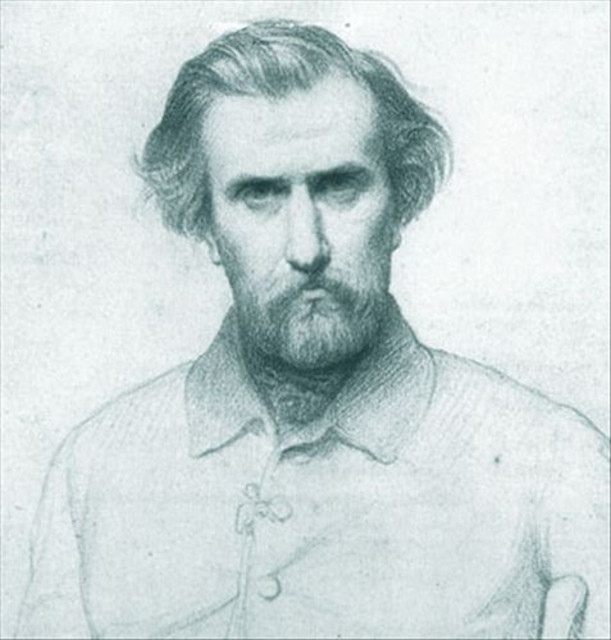
One of leading opera composers of nineteenth century France, Ambroise Thomas was a successor to Meyerbeer, Auber, and Offenbach. He was responsible for Mignon, one of the most popular operas ever written, and the hauntingly beautiful Hamlet. Born into a musical family, Thomas entered the Paris Conservatory in 1828. He won the Prix de Rome for a cantata he wrote there, and studied in Italy and Germany for several years. Returning to Paris in 1835, he turned his attention to composing for the stage. As with much light opera of the period, their wild plot turns and characterizations today seem ludicrous; Le Songe d'une nuit d'été (A Midsummer Night's Dream), for example, includes in its "cast" of characters William Shakespeare (who is drunk for a major part of the action), Queen Elizabeth (as a seductive muse), and Sir John Falstaff. Few of these early operatic works remain in the modern repertory, even in France, apart from some choruses and the very Rossinian overture to his 1851 opera Raymond. Thomas assumed a professorship at the Paris Conservatory in 1856, but ceased composing following the failure of Le roman d'Elvire (The Story of Elvira) in 1860. Then, in 1866, newly inspired and with a fresher, simpler approach to both melody and plot, he re-emerged with Mignon; it was an immediate hit, going on to receive over 1,000 performances at the Opéra-Comique alone between 1866 and 1894. Thomas next offered the public his adaptation of Hamlet (1868), hailed at the Opéra-Comique as a masterpiece of even greater proportions than Mignon; even Verdi abandoned his own intention of composing a Hamlet in deference to Thomas. Though the score contains a great deal of exceptionally beautiful music -- not to mention the first use of a saxophone in an opera -- Hamlet has not weathered the test of time as well as Mignon; this is largely due to its libretto, which is regarded as a severe corruption of its source -- among other major alterations, Thomas's Hamlet had a happy ending! Astonishingly, in the midst of this period of fierce activity, Thomas found time and strength to volunteer for service in the Franco-Prussian War of 1870. Afterwards he became director of the Paris Conservatory; in this post, which he held for the remainder of his life, he proved at first to be an innovative music educator. In later years, however, he came to display resentment toward a new generation of composers, including Fauré and Debussy -- as his last opera, Françoise de Rimini (1882), failed to find success -- and became a far more rigid, conservative figure. Thomas was not entirely eclipsed in his own time, however: in 1894, following the thousandth performance of Mignon, he became the first composer ever to be awarded the Grand Croix of the Legion of Honor. In 1943, nearly 50 years after his death, the English film producer-directors Michael Powell and Emeric Pressburger used a portion of Mignon as a key plot device in their epic film The Life and Death of Colonel Blimp, knowing that audiences would recognize and appreciate it. Both Mignon and Hamlet are represented in the CD catalog, and EMI has even released a version of Hamlet with both the original (i.e. happy) ending and the revised "unhappy" ending (written for the Covent Garden premiere).
First discovered Aug 26, 2026, 10:47 AM