Komitas
Charts
Tracks
Playlists
Press Mentions
Google Rankings
Overview
Not included in any known risky playlists
Monthly Listeners
Series
- Monthly Listeners
- Listeners from Playlists
- Change
Discography
Genres
Spotify has not assigned genres to this artist yet
Top Audiences
Top Listener Locations
 Yerevan, AM1,131
 London, GB935
 Istanbul, TR528
 Sydney, AU412
 Los Angeles, US390
Playlist Summary
Playlist Movement
Biography & Metadata
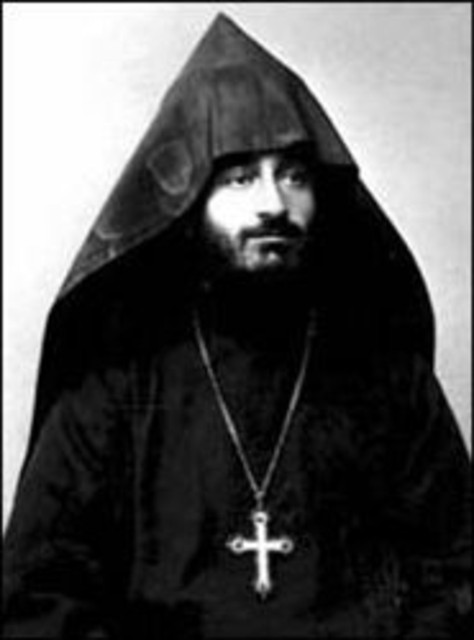
The single-named composer and ethnomusicologist Komitas may be regarded as the founder of the Armenian national school in classical music. Komitas has always been widely known among Armenians, but in the 21st century, his music has attracted interest from outside that culture as well. Komitas was born Soghomon Soghomonian in Kütahya in what then then the Ottoman Empire in present-day Turkey. After he was orphaned, he was sent to the Gevorgian Seminary in Etchmiadzin, Armenia. In addition to religious instruction, he received basic musical training there. Upon being ordained as a vardapet ("priest") in 1894, he took the name Komitas in memory of a medieval Armenian musician by that name; he is sometimes known as Komitas Vardapet. In 1895, he traveled to Tbilisi, Georgia, for studies with church composer Makar Yekmalyan and then to the Friedrich Wilhelm University in Berlin (now Humboldt University) for training in Western music. He continued to take private lessons for several more years despite having few financial resources and cutting back on food in order to afford them. In 1899, Komitas returned to Etchmiadzin, began teaching, and formed his own choir. Komitas wrote large amounts of music for that choir, much of which is still performed today in Armenian Orthodox circles. In the summers, he spent time in the countryside, collecting traditional music in Armenia and beyond; he wrote the first book available on Kurdish folk music. He traveled widely and lectured on traditional music of the region; ethnomusicologists later investigating the history of their discipline considered him one of the pioneers in the field. He also wrote songs in an Armenian idiom. As the Turkish genocide against Armenians began in 1915, Komitas was arrested and sent under difficult conditions to the city of Çankırı. Thanks to the intervention of several influential individuals, some of them Turkish and also including U.S. Ambassador Henry Morgenthau, he was allowed to return to Constantinople (now Istanbul). However, his mental stability was affected by the ordeal. Finally, he was deported to Paris, where he spent many years in psychiatric care and died on October 22, 1935. For many years, Komitas was known primarily in Armenia, but the 21st century has seen a revival of interest in his work. Pianist Steffen Schleiermacher issued the album Folk Tunes in 2021, comparing music by Komitas and Béla Bartók. In 2023, the duo of cellist Mikayel Hakhnazaryan and pianist Lia Hakhnazaryan included his song Krunk on their album Inner World. ~ James Manheim, Rovi
First discovered Nov 8, 2026, 2:50 AM