Jackie Wilson
Charts
Tracks
Playlists
Press Mentions
Google Rankings
Overview
Included in high risk playlists
Monthly Listeners
Discography
Top Audiences
Top Listener Locations
 London, GB45,665
 Sydney, AU17,562Melbourne, AU17,065Manchester, GB16,981Brisbane, AU12,692
Playlist Summary
Playlist Movement
Event | Playlist | Botted? | Position | Track | Happened at | |
|---|---|---|---|---|---|---|
Biography & Metadata
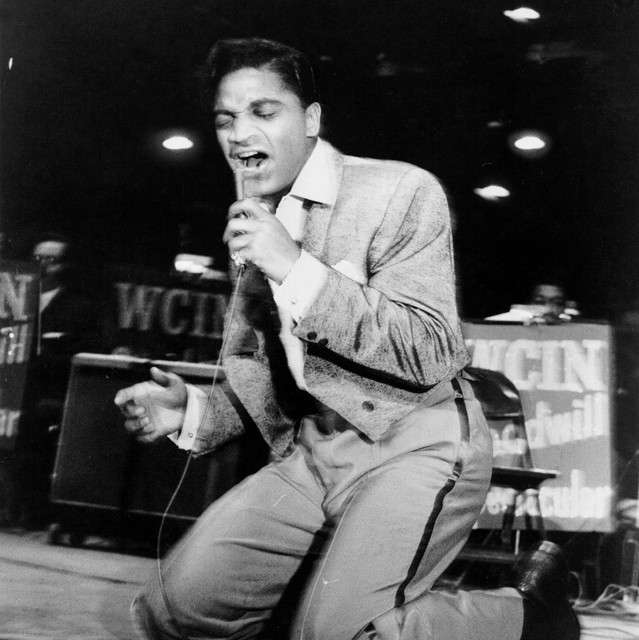
Within the pop music of the 1960s, Jackie Wilson was one of the most important agents of the transition from R&B into soul. In terms of vocal power (especially in the upper register), few could outdo him, and he was an electrifying on-stage showman. Although never a crossover superstar on par with the likes of Ray Charles, James Brown, or Sam Cooke, he was a consistent hitmaker from the mid-'50s through the early '70s. Wilson was well-known on the R&B scene before he went solo in the late '50s. In 1953, he replaced Clyde McPhatter in Billy Ward & the Dominoes, one of the top R&B vocal groups of the time. Commercially, things took a downturn for the Dominoes in the Wilson years, although they did manage a Top 20 hit with "St. Therese of the Roses" in 1956. Elvis Presley was one of those who was mightily impressed by Wilson; he can be heard praising Jackie's on-stage cover of "Don't Be Cruel" in between-song banter during the Million Dollar Quartet session in late 1956. Wilson would score his first big R&B (and small pop) hit in late 1956 with the brassy, stuttering "Reet Petite," which was co-written by an emerging Detroit songwriter named Berry Gordy, Jr. Gordy would also help write a few other hits for Wilson in the late '50s: "To Be Loved," "Lonely Teardrops," "That's Why (I Love You So)," and "I'll Be Satisfied" also crossed over to the pop charts, with "Lonely Teardrops" making the Top Ten. Most of these were upbeat, creatively arranged marriages of pop and R&B that helped set the stage both for '60s soul and for Gordy's own huge pop success at Motown. The early Gordy-Wilson association has led some historians to speculate how much differently (and better) Wilson's career might have turned out had he been on Motown's roster instead of the Brunswick label. Throughout early '60s, Wilson maintained his stardom with regular hit singles that often used horn arrangements and female choruses. He also sometimes went into out-and-out operatic pop, as on "Danny Boy" and one of his biggest hits, 1960's "Night." (Wilson was shot and seriously wounded by a female fan in 1961, though he recovered.) At the same time, he remained capable of unleashing an uptempo, gospel-soaked number: "Baby Workout," which fit that description to a T, was a number five hit for him in 1963. His output and chart success over the next two years was more uneven, although he had a minor hit with 1965's "No Pity (In the Naked City)," which was something like West Side Story done uptown soul style. In 1966, his career was briefly revived when he teamed up with Chicago soul producer Carl Davis, who had been instrumental in the success of Windy City performers like Gene Chandler, Major Lance, and Jerry Butler. Davis successfully updated Wilson's sound with horn-heavy arrangements, helping him get close to the Top Ten with "Whispers," and then to number six in 1967 with "Higher and Higher." Wilson was nearing the end of his career, although he had some minor pop chart entries in the early '70s, including 1970's "This Love Is Real," which landed in the R&B Top Ten. While playing a Dick Clark oldies show at the Latin Casino in New Jersey in September 1975, Wilson suffered a heart attack on-stage while singing "Lonely Teardrops." He lapsed into a coma, suffering major brain damage, and was hospitalized until his death in early 1984. ~ Richie Unterberger, Rovi
First discovered Jul 13, 2026, 9:21 PM