Jacques Offenbach
Charts
Tracks
Playlists
Press Mentions
Google Rankings
Overview
Included in high risk playlists
Monthly Listeners
Discography
Genres
Spotify has not assigned genres to this artist yet
Top Audiences
Top Listener Locations
 Mexico City, MX26,354
 Santiago, CL15,815
 London, GB15,583
 Madrid, ES14,627
 São Paulo, BR11,531
Playlist Summary
Playlist Movement
Event | Playlist | Botted? | Position | Track | Happened at | |
|---|---|---|---|---|---|---|
Biography & Metadata
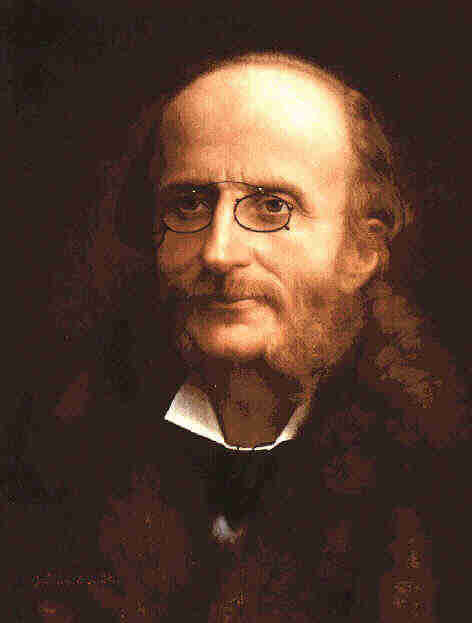
Jacques Offenbach is best known for his opera Les contes d'Hoffman (Tales of Hoffmann) and for a work he did not compose, Gaîté parisienne, which used his themes as assembled and arranged by Manuel Rosenthal. Offenbach was one of those populist figures whose tuneful and exhilarating music could, at its best, elevate his art to classic status. His chief importance was in the development of the operetta as a bona fide genre on the world's stages. In this endeavor he would exert influence to varying degrees over Johann Strauss II, Lehár, Sullivan, and many others. Offenbach was born Jacob Offenbach in Cologne on June 20, 1819. His first lessons were on violin. At age nine his focus turned to the cello, possibly to become the third member of a family trio: his brother Julius was already proficient on the violin, and his sister Isabella was a good pianist. Together, the three played local engagements for small sums of money. Offenbach's teachers included Joseph Alexander and Bernhard Breuer. In 1833, Offenbach's father took him to Paris, where he was enrolled at the Conservatory. It was during his early years there that he adopted the French version of his name, "Jacques." After leaving the Conservatory about a year later, Offenbach took further lessons on the cello from Louis Norblin, but, more importantly, studied composition with Halévy. He supported himself during this period by playing in the Opéra-Comique orchestra. By 1838, when he left his orchestral post, he had become one of the finest cellists in Europe and began performing with Flotow, who played the piano. Although he had been composing small pieces since his childhood, Offenbach began writing larger works now, like the score for the comedy, Pascal et Chambord, premiered in 1839. Over the next several years, Offenbach met and performed with Anton Rubinstein and Franz Liszt, and he traveled to London in 1844 to give concerts with Mendelssohn and Joachim. That same year he married Herminie d'Alcain, following his conversion from Judaism to Catholicism. Clearly, Offenbach could have chosen to remain primarily a performing artist, but in 1847 he began composing operettas, his first being L'alcove. He was appointed conductor at the Théâtre Français in 1850, and by 1855, when he resigned that conducting post for another, began attaining regular performances of his works at important theaters like the Bouffes-Parisiens, at Salle Marigny. Orphée aux enfers (Orpheus in the underworld) was a great success in 1858 and paved the way for his subsequent larger operettas. He had a string of hits in the mid-1860s: La belle Hélène (1864), Barbe-bleue (1866), La vie parisienne (1866), and La Périchole (1868). While his later works also achieved success, they did not generate the level of excitement attained by these. In 1874, Offenbach, now director of the Théâtre de la Gaité, mounted new versions of some of his earlier successful operettas, like La Périchole, but failed to turn profits. Eventually he went into bankruptcy. A concert tour to the United States in 1876 and new productions of his works in London a few years later helped give him financial solvency. Offenbach continued composing up to his last days. He was working on his opera, the aforementioned Les contes d'Hoffman, when he died on October 5, 1880. The work, existing in piano score only, was orchestrated by Guiraud, who also made a few additions.
First discovered Jul 26, 2026, 3:07 PM