Samuel Scheidt
Charts
Tracks
Playlists
Press Mentions
Google Rankings
Overview
Not included in any known risky playlists
Monthly Listeners
Discography
Genres
Spotify has not assigned genres to this artist yet
Top Audiences
Top Listener Locations
 London, GB242
 Madrid, ES169
 Berlin, DE157
 Amsterdam, NL133
 New York City, US108
Playlist Summary
Playlist Movement
Event | Playlist | Botted? | Position | Track | Happened at | |
|---|---|---|---|---|---|---|
Biography & Metadata
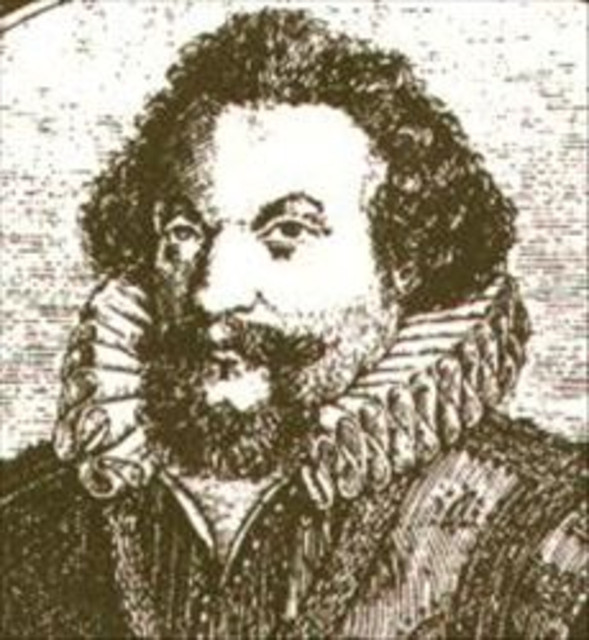
One of the earliest German composers to forge a synthesis of traditional Germanic chorale and counterpoint with the more modern textures emerging from Italy, Samuel Scheidt was a multifaceted composer of music both sacred and secular whose fame, however, rests almost entirely on the excellence of his instrumental music. Scheidt was born in Halle during the late 1580s, within a year of both Heinrich Schütz and Johann Hermann Schein. Both would later become friends of Scheidt, and who were engaged, like Scheidt, in the fusion of the musical idioms from northern and southern Europe. Scheidt's father was a municipal official who maintained a number of friendships with prominent local musicians, and encouraged his sons to pursue musical studies. Scheidt attended public school, and was instructed in music by the Kantor of the local Gymnasium, Matthäus Birkner, until he attained the position of organist at the Moritzkirche in Halle in 1604. After resigning the post four years later, Scheidt journeyed to Amsterdam for a period of study with well-known organist Jan Sweelinck, whose music Scheidt would later edit and publish back in Germany. From 1609 to 1625, Scheidt served as court organist and secular keyboard composer to Christian Wilhelm of Brandenburg, the new administrator of Halle. These were prosperous years for the composer, and after 1619 Scheidt combined his duties as organist with those of kapellmeister, strengthening the instrumental and vocal forces of the court and overseeing the rebuilding of the Mortizkirche organ. Much of Scheidt's better-known music hails from the years immediately following his appointment as Kapellmeister: three separate volumes of instrumental pieces, one collection each of motets and vocal concertos, and the Tabulatura nova, a massive collection of organ music, all which appeared between 1620 and 1624. In 1625, however, Wilhelm left Halle to fight in the Thirty Years War, and Scheidt was left virtually unemployed. Despite his lack of salary and the departure of most of his musicians for more lucrative positions, Scheidt remained in Halle, earning what he could from teaching and the occasional commission from other cities' courts. He was rewarded for such loyalty in 1628, when Halle created a new and important musical post for him, that of director musices (musical director). A conflict with the Rektor of the local Gymnasium, who claimed, as did Scheidt, to have jurisdiction over the choirboys, resulted in Scheidt's dismissal from the post in 1630. The composer's personal life soon worsened when all of his children died of the plague during a 1636 outbreak. In 1638, the return of a city administrator (now Duke August of Saxony) brought a renewed musical prosperity to Halle, and Scheidt once again assumed his duties as the city's kapellmeister. He continued to compose music for public and private occasions until his death in 1654 at the age of 66.
First discovered Aug 27, 2026, 12:33 AM