Victor Herbert
Charts
Tracks
Playlists
Press Mentions
Google Rankings
Overview
Not included in any known risky playlists
Monthly Listeners
Discography
Genres
Spotify has not assigned genres to this artist yet
Top Audiences
Top Listener Locations
 Quezon City, PH191
 London, GB175
 Sydney, AU172
 New York City, US147Melbourne, AU144
Playlist Summary
Playlist Movement
Event | Playlist | Botted? | Position | Track | Happened at | |
|---|---|---|---|---|---|---|
Biography & Metadata
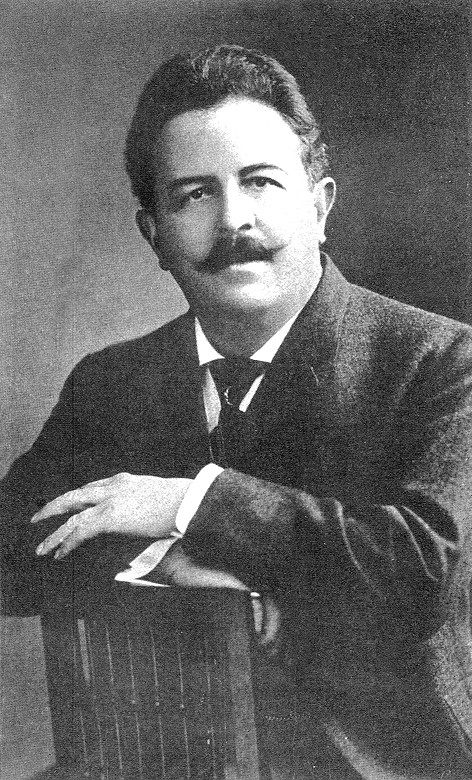
Victor Herbert was one of the most versatile and important figures in American music at the turn of the twentieth century. This Irish-born American was a busy conductor and one of the foremost cellists of his time, besides being a once-popular operetta composer. His talent as a composer should not be overstated; Herbert's music, tailored to the middle-class tastes of his era, now seems quaint, yet it is solidly crafted and durably melodic enough to merit revival. Raised in Stuttgart, Herbert studied composition there with Max Seifritz and cello with Bernhard Cossmann. During his teens he was employed as a cellist in various European orchestras. In 1880 he joined the Eduard Strauss waltz orchestra in Vienna, but the following year he returned to Stuttgart to play in the court orchestra and study composition at the conservatory. In 1886 he went to New York with his new wife, Therese Förster, who had been recruited as a prima donna at the Metropolitan Opera. Herbert, too, got a job at the Met, playing in the orchestra. He played his first Cello Concerto with the New York Philharmonic Society in 1887, and premiered his Second Concerto there in 1894; Dvorák heard the latter work, which inspired him to write his own cello concerto. As a conductor, Herbert was affiliated with the Boston Festival Orchestra in 1891 and the Worcester Festival from 1889 to 1891; for that organization, he composed his dramatic cantata The Captive. In 1893 he assumed leadership of the celebrated 22nd Regiment Band (formerly P.S. Gilmore's). From 1898 to 1904 he conducted the Pittsburgh Symphony Orchestra, there premiering several of his own pieces, including Hero and Leander (nearly a century later, the Pittsburgh Symphony finally recorded some of this material under Lorin Maazel). In 1904 Herbert organized the Victor Herbert New York Orchestra for light programs and high-profile benefit performances, leading more than 400 participants in concerts to raise money for the victims of the Galveston flood and later the San Francisco earthquake. He also led the fight for copyright legislation, passed in 1909, and he helped found the American Society of Composers, Authors, and Publishers (ASCAP) in 1914, serving as its vice president until his death. Herbert's first operetta was Prince Ananias (1894), penned at the suggestion of the manager of the Boston Ideal Opera Company. It was followed by more than 40 others. Among the best are Babes in Toyland (1903; it periodically suffers loose film and TV adaptations, but its March survives intact as a pops favorite); Mlle. Modiste (1905; his greatest hit of the period); The Red Mill (1906); Naughty Marietta (1910); Sweethearts (1913); and Eileen, first performed as Hearts of Erin (1917). He also wrote two grand operas, the Wagnerian Natoma (1911; premiered in Philadelphia by a cast that included Mary Garden and John McCormack), and the Straussian Madeleine (1914). Both of them, despite high expectations and initial enthusiasm, were ultimately judged failures. He also produced the music for the motion picture The Fall of a Nation (1916), one of the first original symphonic scores composed for a feature film. Late in life he wrote for revues, notably the Ziegfeld Follies.
First discovered Aug 16, 2026, 8:56 PM