Fernando Sor
Charts
Tracks
Playlists
SEO
Press Mentions
Overview
Not included in any known risky playlists
Monthly Listeners
Discography
Top Audiences
Top Listener Locations
 Mexico City, MX1,500
 Madrid, ES1,316
 São Paulo, BR1,140
 Santiago, CL1,075
 London, GB970
Playlist Summary
Playlist Movement
No activity found
This artist's playlist additions and removals will appear here.
Biography & Metadata
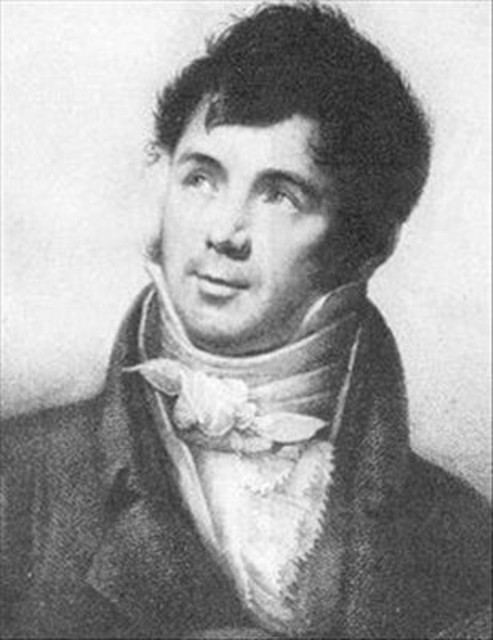
Spanish composer Fernando Sor (originally Sors), despite having composed prolifically for various vocal and instrumental ensembles, is remembered today chiefly as a virtuoso guitarist whose hundred-plus compositions for that instrument constitute a vital part of its concert repertory. While the exact date of Sor's birth remains unknown, he is known to have been born in Barcelona and baptized on Valentine's Day in the year 1778. Of Catalan ancestry, Sor attended the choir school at Montserrat monastery and later enrolled in Barcelona's military academy. After the production of his opera Telemaco nell'isola de Calipso in 1797 he moved to Madrid, where he served in a number of minor administrative positions and continued to compose privately. During the French invasion of 1808 Sor's military background and patriotism roused him to fight against the invaders, though by 1810 he had resigned himself to the presence of the new regime; when the French withdrew three years later Sor opted, along with countless other Spanish artists and intellectuals, to return to Paris with them. After two years of teaching guitar and performing in various Parisian venues, Sor moved to London and remained there for eight years (1815-1823). Many of his works were published there, and his thirty-three Italian vocal ariettas (published in groups of three) made a particularly strong impact. Sor also gained fame after directing his energies toward the ballet; Cendrillon (1822) achieved the most favorable critical and public response and was successfully transplanted to Paris in 1822. When the Bolshoi theater in Moscow showed an interest in the work for the 1823 season, Sor accompanied the lead dancers to Moscow. He limited his compositional activities to music for the guitar while staying in Russia, and by the time he returned to Paris in 1826 he had several works for the instrument ready for publication and had completed much of the work on a Méthode pour la guitare, eventually published in Paris in 1830. Except for occasional trips abroad, such as a journey to London in 1828 to oversee production of a new ballet, Hassan et le calife, Sor remained in Paris, composing and teaching guitar, until his death in 1839. Much of Sor's music that has survived (two symphonies, three string quartets and any number of smaller pieces have been lost since his death) has been abandoned by performers, but his music for the guitar lives on. Much of his reputation is based on the continued use of his Méthode by teachers and students of classical guitar. Sor's musical style derives largely from an awareness of the late eighteenth century German masters (in particular Haydn); his guitar music, with its independent voices and occasionally contrapuntal textures, shows a tendency to move away from the largely chordal textures that had been common up to that point.
First discovered Jan 30, 2026, 5:55 PM