Lan Shui
Charts
Tracks
Playlists
Press Mentions
Google Rankings
Overview
Not included in any known risky playlists
Monthly Listeners
Discography
Genres
Spotify has not assigned genres to this artist yet
Top Audiences
Top Listener Locations
 Mexico City, MX451
 Singapore, SG369
 London, GB280
 Chicago, US271New York City, US222
Playlist Summary
Playlist Movement
Event | Playlist | Botted? | Position | Track | Happened at | |
|---|---|---|---|---|---|---|
Biography & Metadata
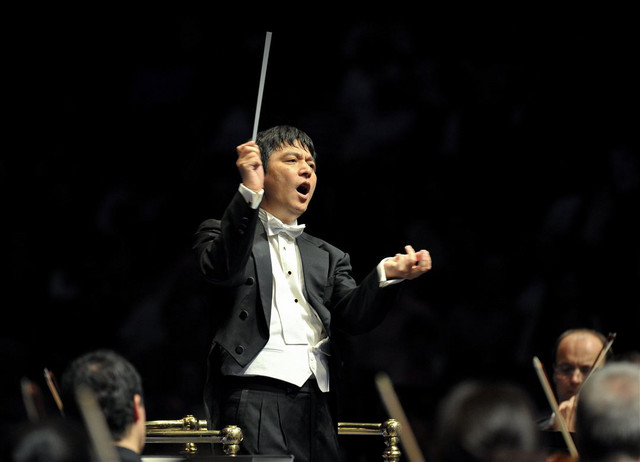
Lan Shui is among Asia's best-known conductors, widely recognized and praised during his long tenure as conductor of the Singapore Symphony Orchestra. He led that group to prominence in the Western recording world. Lan Shui was born in Hangzhou, China, in 1957. In the Chinese naming system, Shui is his family name, and Lan his given name, but in English-speaking countries, he uses the Western form. He was the child of a doctor and a banker. Shui began studies on the violin and piano as a child, but during the Cultural Revolution, when authorities clamped down on the performance and study of Western music, his piano teacher committed suicide, and he was forced to give up his studies. He was able to resume violin lessons after the grip of the Cultural Revolution weakened, traveling 28 hours by train to the capital city of Beijing. He landed a spot in an opera orchestra there, and the orchestra's conductor suggested that he try conducting. Shui, reluctant to give up a secure post as a violinist, refused, but the conductor feigned illness and asked Shui to take over a rehearsal. Finding that he was, as the conductor predicted, a natural, Shui finally agreed to switch. After five years of study at Beijing's Central Conservatory, he became the conductor of the Beijing Symphony Orchestra, but he was frustrated by continuing government restrictions on the music he was allowed to conduct. So, in 1986, he applied to Boston University's master's-level conducting program and was accepted. Shui also took master classes with Leonard Bernstein at the Tanglewood Music Festival. He landed a post as assistant conductor with the Baltimore Symphony Orchestra, and then as associate conductor at the Detroit Symphony, appearing as a guest with various American orchestras. In 1993, he was invited by Choo Hoey, conductor and founder of the Singapore Symphony, to conduct that orchestra for the first time, and in 1997, he was elevated to music director there. Shui remained in that post until 2019 when he retired and became conductor laureate. During his tenure, he built the orchestra's reputation internationally; the American Record Guide asserted "[o]ne cannot avoid comparing what Shui has achieved in Singapore with what George Szell did in Cleveland or Simon Rattle in Birmingham. He has turned a good regional orchestra into a world-class ensemble." He led the orchestra on tours of Asia, Europe, and the U.S. Shui also served as the principal conductor of the Copenhagen Philharmonic Orchestra from 2007 to 2015. Shui has issued some 30 recordings, most of them on the BIS label. For Orchid Classics, he led the Copenhagen Philharmonic in a complete cycle of Beethoven's symphonies. On BIS, with the Singapore Symphony, he recorded the first complete cycle of the symphonies of composer Alexander Tcherepnin, who lived in Shanghai and whose music contained Chinese elements. His catalog with the orchestra has included both Western and Chinese works. His recording of Richard Strauss' Rosenkavalier Suite, Tod und Verklärung, and the rarely heard Macbeth, Op. 23, appeared on BIS in 2020.
First discovered Oct 17, 2026, 12:12 PM