Secos & Molhados
Charts
Tracks
Playlists
Press Mentions
Google Rankings
Overview
Included in high risk playlists
Monthly Listeners
Series
- Monthly Listeners
- Listeners from Playlists
- Change
Discography
Top Audiences
Top Listener Locations
 São Paulo, BR481,443Rio de Janeiro, BR200,667Belo Horizonte, BR154,561Brasília, BR113,198Salvador, BR94,373
Playlist Summary
Playlist Movement
Event | Playlist | Botted? | Position | Track | Happened at | |
|---|---|---|---|---|---|---|
Biography & Metadata
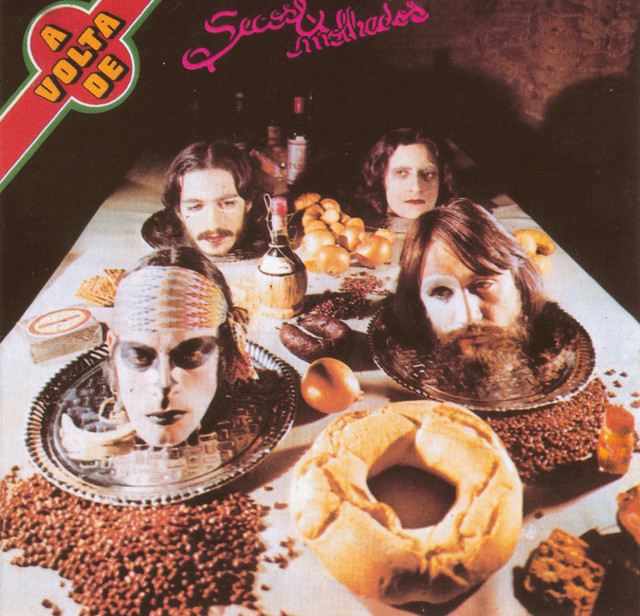
Founded in 1971 by João Ricardo (singer/composer/violão/harmonica), who was soon joined by Ney Matogrosso (vocalist) and Gerson Conrad (vocalist/composer/violão), Secos & Molhados are inscribed in a privileged category of few bands and musicians who led Brazil from bossa nova through tropicália and then to Brazilian rock, a style that only blossomed in the '80s. Much of the group's importance, apart from the huge success of its first album, which sold 700,000 copies in 1973, was the heavy use of stage makeup and dramatic elements. These served as reference for a generation of underground bands that wouldn't accept MPB as their expression, finally drawing a definite outlook in Brazilian music in the '80s through collective contribution. João Ricardo, a journalist from the newspaper Última Hora (São Paulo), leader and founder of Secos & Molhados, was born in Ponte do Lima, Portugal in 1949. His father, poet/critic João Apolinário, was a major influence in his literary life, and would even contribute lyrics to two songs on the group's debut album, and one on the follow-up. Secos & Molhados ("dry and wet goods," a typical upcountry warehouse) were devised by Ricardo, who found in his two partners the perfect vehicles for his concepts. Ney, who would explode on the stage with his magnetic presence, his counter-tenor voice, and his extravagant androgynous outfit, remaining as the only successful artist of the trio after the end of the group, was introduced by singer/composer Luli, a common friend; Gerson was already a neighbor and friend of Ricardo's. In December 1972, the group did a successful series of shows in the nightclub Casa de Badalação e Tédio (São Paulo). With the presence of Ney, the spectacle was highly visual, dynamic, and energetic, exploring in a sexually ambiguous way the new sounds of the band. Texts of important poets like Cassiano Ricardo, Manuel Bandeira, Solano Trindade, and Vinícius de Moraes were used as song lyrics, which was unusual. In 1973, the group's success in live appearances yielded an invitation from Continental, and Secos & Molhados was recorded. The album sold 700,000 copies, a nationwide hit. Among the packed shows that followed, especially deserving of mention is the one performed in the Maracanãzinho stadium for 25,000 people (which was recorded and released in 1980), and in the Presidente Médici Gymnasium in Brasília. The following year, the group was featured on Mexican TV, and recorded a second LP, also titled Secos & Molhados, which also sold very well. Secos & Molhados could have anticipated Brazilian rock, but were dissolved before that could happen, in 1974. Disagreements about finances arose between Gerson and Ney, and between father and son, who were directly responsible for the disbanding. João Ricardo released an album in 1975, João Ricardo (Philips), and tried to resurrect the band four times, always with a different formation and no original members. Gerson continued to perform and record, and Ney departed for a highly successful career, ultimately exhibiting a true reverence for MPB. ~ Alvaro Neder, Rovi
First discovered May 11, 2025, 8:36 PM