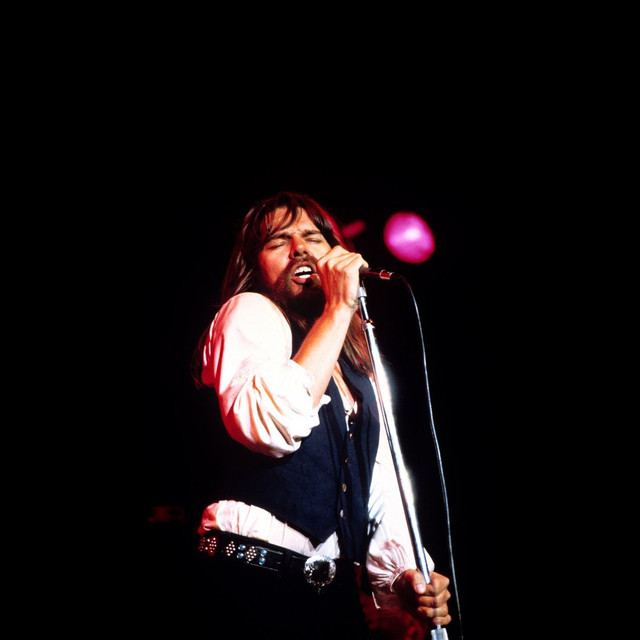
Bob Seger
Charts
Tracks
Playlists
Press Mentions
Google Rankings
Overview
Included in high risk playlists
Monthly Listeners
Discography
Top Audiences
Top Listener Locations
 Sydney, AU177,788
 Chicago, US162,425Brisbane, AU158,478Melbourne, AU156,890Dallas, US123,316
Playlist Summary
Playlist Movement
Event | Playlist | Botted? | Position | Track | Happened at | |
|---|---|---|---|---|---|---|
Biography & Metadata
Bob Seger is one of the most beloved names in classic rock, with a catalog of songs that have provided millions of fans working class anthems, soul-touching ballads, and a soundtrack for life's best moments based on a foundation of old-time rock and roll. The Michigan journeyman's roots go back to the garage days of the early '60s, but it was hard touring and a consistent drive to make hard-edged but always fun rock sounds that brought him and his Silver Bullet Band a dedicated following and eventual commercial breakthrough in the mid-'70s. Albums like 1976's Night Moves provided FM radio with hits that would stay in rotation for decades to come, while Seger hit the upper reaches of the charts time and time again in the '80s with more mature, reflective work like 1986's Like a Rock. While he officially retired from public performances in 2019, Seger's status as a musical working-class hero remains strong, and his songs remain cherished by generations of fans, in particular those who see themselves in the everyday people and middle American characters he sings about. Seger began playing music in 1961 as the leader of the Detroit-based trio the Decibels; his future manager, Eddie "Punch" Andrews was also a member of the band. Moving to Ann Arbor, he played with the Town Criers before he became the keyboardist and vocalist for Doug Brown & the Omens. Billing themselves as the Beach Bums, the band released "The Ballad of the Yellow Beret," a parody of the Sgt. Barry Sadler song "The Ballad of the Green Beret." The single was withdrawn shortly after its release after Sadler threatened a lawsuit. In 1966, Seger released his first solo single, "East Side Story," which became a regional hit. Several other local hit singles followed on Cameo Records, including "Persecution Smith" and "Heavy Music," before his label folded. In 1968, he formed the Bob Seger System and signed with Capitol Records, releasing his debut album, Ramblin' Gamblin' Man, in the spring of that year. The title track became a national hit, climbing to number 17, but the group's follow-up, Noah, stiffed and Seger decided to quit the music business in 1969 to attend college. One year later, Seger returned to rock & roll with a new backing band, releasing Mongrel at the end of 1970. For 1971's Brand New Morning, he disbanded his group and recorded a singer/songwriter effort. Following its release, he began performing with the duo Dave Teegarden and Skip "Van Winkle" Knape, and they provided support on 1972's Smokin' O.P.'s, which was the first release on Palladium Records, a label he formed with Andrews. The album failed to sell, as did Back in '72 (1973) and Seven (1974), and he moved back to Capitol Records for 1975's Beautiful Loser. For the recording of Beautiful Loser, Seger formed the Silver Bullet Band, which consisted of guitarist Drew Abbott, bassist Chris Campbell, keyboardist Robyn Robbins, saxophonist Alto Reed, and drummer Charlie Allen Martin. Seger supported Beautiful Loser with an extensive tour with the Silver Bullet Band, and while it didn't make the album a hit, it provided a widespread grassroots following across the country. The touring paid off in 1976, when Live Bullet, a double album recorded in Detroit, became a hit, spending over three years on the U.S. charts and going gold; the album would eventually go quadruple platinum. The groundswell behind Live Bullet sent Seger's next studio album, Night Moves (1976), into the Top Ten early in 1977. Night Moves became a blockbuster, generating the hit singles "Night Moves," "Mainstreet," and "Rock & Roll Never Forgets." Stranger in Town, released in the summer of 1978, was just as successful, featuring the hits "Still the Same," "Hollywood Nights," "We've Got Tonite," and "Old Time Rock & Roll." Stranger in Town confirmed his status as one America's most popular rockers. Seger's next album, 1980's Against the Wind, became his first number one album and all of its big hits -- "Fire Lake," "Against the Wind," "You'll Accomp'ny Me" -- were ballads. The live album Nine Tonight continued his multi-platinum success in 1981, selling three million copies and peaking at number three. Seger returned with The Distance in 1982. The Distance was the first album since Seven to be recorded with the addition of session musicians, which caused guitarist Abbott to quit the band in frustration. Over the course of the next decade, the membership of the Silver Bullet Band shifted constantly. While The Distance featured "Shame on the Moon," his biggest hit single to date, its sales plateaued at a million copies, suggesting that his popularity was beginning to level off. Seger also began to drastically reduce his recording and touring schedules -- he only released one other album, 1986's Like a Rock, during the '80s. Like a Rock and its supporting tour were both successes, paving the way for "Shakedown," a song taken from the 1987 soundtrack to Beverly Hills Cop II, which became Seger's lone number one hit. Four years after its release, he returned with The Fire Inside. Although the album went platinum and reached the Top Ten, it only appealed to Seger's devoted following, as did 1995's It's a Mystery, which became his first album since Live Bullet to fail to go platinum, leveling off at gold status. A long hiatus followed, where Seger kept his head down and spent time with his family. These quiet years were only interrupted by his 2004 induction into the Rock & Roll Hall of Fame. Finally, in 2006, after an 11-year hiatus, Seger released Face the Promise, his first record since 1975's Beautiful Loser not to feature the Silver Bullet Band. Although it spawned no big hit singles -- "Wait for Me" made it into the Billboard adult contemporary Top 20 -- Face the Promise performed well, debuting at four on the Billboard charts on its way to a platinum certification. A couple archival projects followed: the 2009 compilation Early Seger, Vol. 1, which balanced previously released cuts with re-recorded old tunes, and the 2011 double-disc set Ultimate Hits: Rock & Roll Never Forgets, which was certified platinum and generated a modest adult contemporary hit cover of Tom Waits' "Downtown Train." A new album titled Ride Out appeared in October of 2014, debuting at number three on the Billboard charts. Seger next released I Knew You When, a 2017 album that was dedicated to the recently deceased Glenn Frey. This would serve as Seger's last official studio album, as he retired from the public eye after completing his 2019 tour in support of the record. He momentarily broke out of his retirement in 2023 for a one-off show at the Country Music Hall of Fame in Nashville when Patty Loveless was inducted, but planned no further tours from there. In 2026, Seger released a deluxe edition of Face the Promise for its 20th anniversary, filled out with four bonus tracks. ~ Stephen Thomas Erlewine, Rovi
First discovered Feb 11, 2025, 1:04 PM