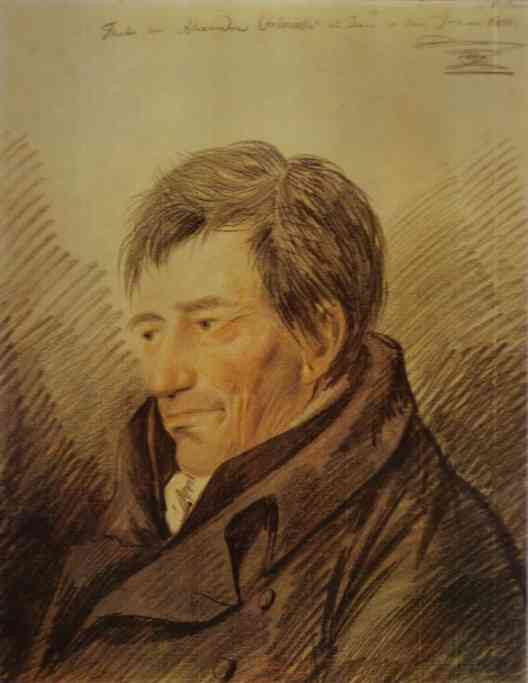
Muzio Clementi
Charts
Tracks
Playlists
SEO
Press Mentions
Overview
Not included in any known risky playlists
Monthly Listeners
Discography
Genres
Spotify has not assigned genres to this artist yet
Top Audiences
Top Listener Locations
 Mexico City, MX2,053
 Santiago, CL1,592
 Singapore, SG1,293
 Taipei, TW1,234
 São Paulo, BR1,210
Playlist Summary
Playlist Movement
No activity found
This artist's playlist additions and removals will appear here.
Biography & Metadata
Born shortly after Handel wrote his oratorio Jephtha and dead shortly after Berlioz wrote his Symphonie fantastique, Muzio Clementi failed to write anything equal to the originality of those two composers -- or, certainly, equal to the best of his closer contemporaries, Mozart and Haydn. Yet Clementi remains a significant figure for his pioneering work on behalf of the newfangled piano, that percussive, expressive instrument that quickly displaced the harpsichord at the end of the 18th century. His full-scale sonatas and small studies exploited the possibilities of the early piano and groomed the technique of early pianists, and led him to be known as "the father of the piano." His influence on Beethoven has likely been underestimated. Clementi was a child prodigy, with an appointment as an organist at age 9 and an oratorio to his credit by the time he was 12. In 1766 his father was persuaded to take the boy to study in England, the country that would remain Clementi's base for the rest of his life. In the English countryside, the youth undertook a rigid course of studies, emerging in 1773 for a spectacular debut in London as a composer and pianist. Had Clementi matured anywhere else in Europe, he might have limited himself to the organ and harpsichord, but the piano was enormously popular in England, and he furthered his career by capitalizing on the instrument's expanded capabilities. In 1780, he went on tour to the Continental capitals; in Vienna, Emperor Joseph II instigated a friendly musical duel between Clementi and Mozart. Clementi settled down in London in 1782, dividing his time between teaching (his pupils included Cramer, Meyerbeer, and Field), composing, and performing. In 1799, he co-founded a company that both published music and manufactured pianos. Toward the end of his life, he traveled through Europe again and spent more and more time composing; during this period, he wrote several symphonies, but most have been lost. He is mainly remembered for his dozens of piano sonatas, and for his collection of studies, Gradus ad Parnassum ("Steps Toward Parnassus"), which has been the bane of piano students for two centuries and was parodied by Debussy in the opening movement of his Children's Corner. Clementi was the complete piano man, popularizing the instrument through his own performances, writing exercises to develop young pianists, writing sonatas for mature pianists to play, and manufacturing instruments for their use. ~ James Reel, Rovi
First discovered Sep 12, 2026, 6:54 PM