John Tavener
Charts
Tracks
Playlists
Press Mentions
Google Rankings
Overview
Included in high risk playlists
Monthly Listeners
Discography
Genres
Spotify has not assigned genres to this artist yet
Top Audiences
Top Listener Locations
 London, GB3,582
 Madrid, ES1,185
 Mexico City, MX1,094
 Amsterdam, NL981
 New York City, US957
Playlist Summary
Playlist Movement
Event | Playlist | Botted? | Position | Track | Happened at | |
|---|---|---|---|---|---|---|
Biography & Metadata
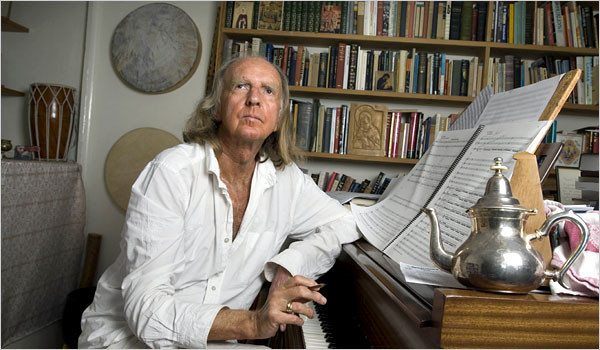
Among the most commercially successful of modern composers, John Tavener experienced a remarkable musical and spiritual odyssey. After his acceptance of the Orthodox Christian faith, he formulated a unique new idiom, often employing a slow, almost minimalist unfolding of melodic material. Much of his music is designed for religious services. His works often require odd combinations of forces, for example The Apocalypse (1993), for tenor, bass, soprano, mezzo-soprano, solo saxophonists, male choir, countertenor choir, organ, brass, string quartet, and string ensemble. Overall, he was considered a unique eclectic, part mystical and part populist. Tavener was born in Wembley Park, near London. Long-held family beliefs to the contrary, he was probably not descended from Tudor composer John Taverner. He was raised a Protestant but as a young man converted to Catholicism. He studied piano, organ, and composition, and went on to study with Solomon, Lennox Berkeley, and Lumsdaine at the Royal Academy of Music. In 1968, after the composer's music impressed both John Lennon and Ringo Starr, Apple recorded his work The Whale. The next year, he became professor of composition at Trinity College. In 1974, Tavener and Victoria Maragopoulou, a Greek ballet student, were married in an Orthodox ceremony. After eight months, however, she left for Greece, even though they remained legally married and friendly for a decade. Tavener received counsel from the Orthodox clergyman who had married them. Several works of the period, including The Liturgy of St.John Chrysostom, had an Orthodox or Russian bent, and in 1977 Tavener became a member of the Orthodox Church. After recovering from a 1980 stroke, Tavener began to consider himself an Orthodox composer. In 1981 he met Mother Thekla, an Orthodox abbess in North Yorkshire. That year, Prayer for the World appeared, and the composer described it as his most radical work. The following Ikon of Light (1983), for chorus and string trio, was enthusiastically received, but still Tavener felt inadequate in his Russian Orthodox faith in comparison with Arvo Pärt, a member from birth and sometimes considered the more genuine of the two. After consulting with an Orthodox psychoanalyst, the composer embarked on the massive Orthodox Vigil Service (1984), for priests, chorus, and handbells. In 1985 Tavener's mother died; he announced that he would cease composing, but he hardly broke stride. Among the works that followed was the heavily recorded The Protecting Veil (1987), for cello and strings. Shortly after finishing Thrinos (1990), for solo cello, Tavener had surgery to replace a defective heart valve. The composer recovered sufficiently to begin collaboration with Mother Thekla on Let's Begin Again (1995). With his first marriage annulled on grounds of non-consummation, Tavener and Maryanna Schaefer were married in 1991. The 1992 Virgin Classics release of The Protecting Veil became a best-selling classical CD, spawning further efforts by other labels. By the mid-'90s, Tavener's popularity in Britain rivaled that of Benjamin Britten in his prime, and he was gaining international attention. In 1996, Tavener's father died, and the composer wrote the Funeral Canticle in his memory. Tavener CD releases sold consistently on both sides of the Atlantic, and in 1999 he began work on Fall and Resurrection. His 70-minute liturgical drama Lamentations and Praises was commissioned by the U.S. chorus Chanticleer and released on CD in 2002. He suffered a major heart attack in 2007, which worsened his health until he died in 2013. ~ Robert Cummings, Rovi
First discovered Aug 25, 2026, 9:22 AM