Christian Sinding
Charts
Tracks
Playlists
SEO
Press Mentions
Overview
Not included in any known risky playlists
Monthly Listeners
Discography
Top Audiences
Top Listener Locations
 London, GB401
 Mexico City, MX381
 São Paulo, BR320
 Sydney, AU292
 New York City, US242
Playlist Summary
Playlist Movement
No activity found
This artist's playlist additions and removals will appear here.
Biography & Metadata
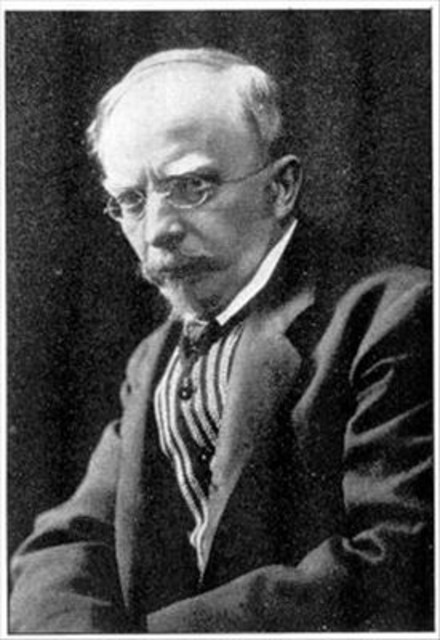
Christian August Sinding studied music in addition to his academic studies throughout his school years, taking violin with Gudbrand Bøhn and music theory with L.M. Lindeman, one of the most important musicians in Christiana (later renamed Oslo). In 1874 he followed the path of his famous countryman Edvard Grieg by going to Leipzig to study. There, his violin teacher was Schradieck and his theory and composition teacher was Jadassohn. It became obvious that his major talent was for composition, so he gave up his violin studies in favor of it. He remained primarily in Germany for a total of 40 years, but retained Norwegian elements in his music. The Norwegian government gave him regular grants from 1880, which were made into an annual pension in 1910. In 1916 the Norwegian government recognized him with a grant of 30,000 crowns, in recognition of his being the "greatest national composer since Grieg." He taught at the Eastman School of Music in Rochester, NY, in the 1920 - 1921 academic year. After that he settled in Oslo and remained centered in Norway for the rest of his long life. His music is tuneful, attractive, well-orchestrated, and distinctive, but as far as technique is concerned he was not an innovator. He formed his basic style during his studies in Germany, adopting the vocabulary of Schumann, Liszt, Strauss, and, to a lesser degree, Wagner. He tended to use cyclic forms and other trappings of the Romantic era to the end of his life, by which time the general opinion of his music declined (to an unfair degree) due to the anti-Romantic reaction of the time. On the other hand, through the last two decades of his life, he had a tendency to write in larger forms. He wrote four symphonies of which the First (1880 - 1890), a work with remarkably violent crescendos, is the most striking. His music has abrupt dislocations of tonality without tending towards atonality. He also wrote about 250 songs, and is considered one of the greatest Scandinavian creators of art songs. Much of his music is descriptive, though he was also praised for some of his chamber music, particularly the early Piano Quintet, Op. 5 (the first work to give him widespread fame), and his String Quartet, Op. 70. Among his smaller pieces, the Romances for Violin, Op. 79, and his Rustles of Spring have permanent places in the international repertoire.
First discovered Sep 8, 2026, 8:00 AM