Erik Satie
Charts
Tracks
Playlists
Press Mentions
Google Rankings
Overview
Included in high risk playlists
Monthly Listeners
Discography
Top Audiences
Top Listener Locations
 Istanbul, TR82,387
 London, GB68,432
 Mexico City, MX61,604
 São Paulo, BR40,352
 New York City, US37,974
Playlist Summary
Playlist Movement
Event | Playlist | Botted? | Position | Track | Happened at | |
|---|---|---|---|---|---|---|
Biography & Metadata
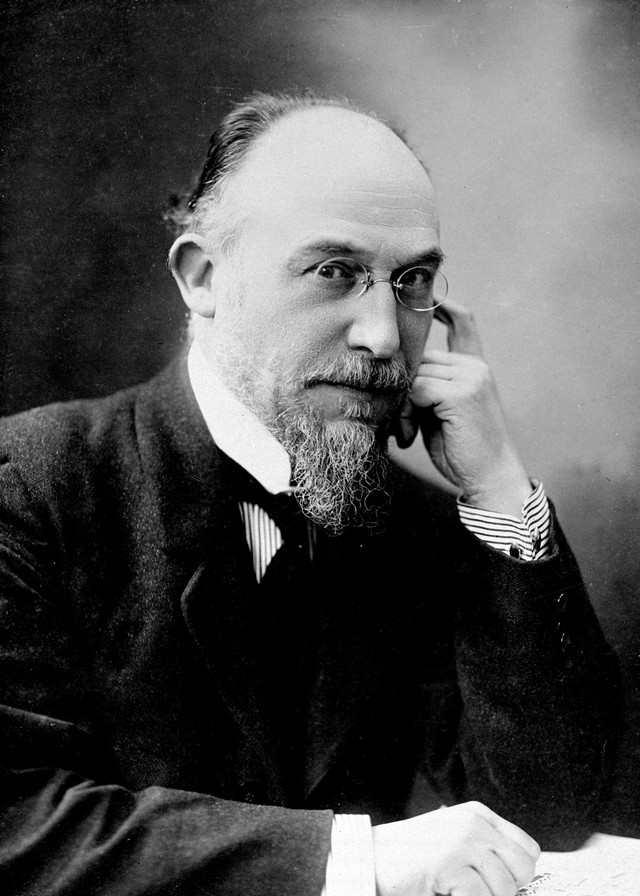
Erik Satie was an important French composer from the generation of Debussy. Best remembered for several groups of piano pieces, including Trois Gymnopédies (1888), Trois Sarabandes (1887) and Trois Gnossiennes (1890), he was championed by Jean Cocteau and helped create the famous group of French composers, Les Six, which was fashioned after his artistic ideal of simplicity in the extreme. Some have viewed certain of his stylistic traits as components of Impressionism, but his harmonies and melodies have relatively little in common with the characteristics of that school. Much of his music has a subdued character, and its charm comes through in its directness and lack of allegiance to any one aesthetic. Often, his melodies are melancholy and hesitant, his moods exotic or humorous, and his compositions as a whole, or their several constituent episodes, short. He was a musical maverick who probably influenced Debussy and did influence Ravel, who freely acknowledged as much. After Satie's second period of study, he began turning more serious in his compositions, eventually producing his inspiring cantata, Socrate, considered by many his greatest work and clearly demonstrating a previously unexhibited agility. In his last decade, he turned out several ballets, including Parade and Relâche, indicating his growing predilection for program and theater music. Satie was also a pianist of some ability. As a child, Satie showed an interest in music and began taking piano lessons from a local church organist named Vinot. While he progressed during this period, he showed no unusual gifts. In 1879, he enrolled in the Paris Conservatory, where he studied under Descombe (piano) and Lavignac (solfeggio), but failed to meet minimum requirements and was expelled in 1882. Satie departed Paris on November 15, 1886, to join the infantry in Arras, but he found military life distasteful and intentionally courted illness to relieve himself of duty. That same year, his first works were published: Elégie, Trois Mélodies, and Chanson. The years following his military service formed a bohemian period in Satie's life, the most significant events of which would be the beginnings of his friendship with Debussy, his exposure to eastern music at the Paris World Exhibition, and his association with a number of philosophical and religious organizations (most notably the Rosicrucian Brotherhood). In 1905, Satie decided to resume musical study, enrolling in the conservative and controversial Schola Cantorum, run by Vincent d'Indy. His music took on a more academic and rigorous quality and also began to exhibit the dry wit that would become hallmarks of his style. Many of his compositions received odd titles, especially after 1910, such as Dried up embryos and Three real flabby preludes (for a dog). Some of his works also featured odd instructions for the performer, not intended to be taken seriously, as in his 1893 piano work, Vexations, which carries the admonition in the score, "To play this motif 840 times in succession, it would be advisable to prepare oneself beforehand, in the deepest silence, by serious immobilities." In 1925, Satie developed pleurisy, and his fragile health worsened. He was taken to St. Joseph Hospital, where continued to live for several months. He received the last rites of the Catholic Church in his final days and died on July 1, 1925. ~ Rovi Staff, Rovi
First discovered Oct 15, 2025, 2:05 PM