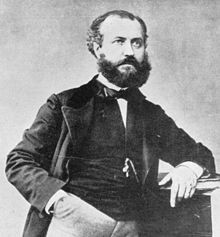
Charles Gounod
Charts
Tracks
Playlists
Press Mentions
Google Rankings
Overview
Included in high risk playlists
Monthly Listeners
Discography
Genres
Spotify has not assigned genres to this artist yet
Top Audiences
Top Listener Locations
 Mexico City, MX11,705
 São Paulo, BR11,667
 London, GB10,465
 Madrid, ES8,564
 Sydney, AU7,282
Playlist Summary
Playlist Movement
Event | Playlist | Botted? | Position | Track | Happened at | |
|---|---|---|---|---|---|---|
Biography & Metadata
Charles Gounod is best known for his operas Faust and Romeo et Juliette and for his Ave Maria based on the first Prelude of Bach's Well-Tempered Clavier, Book 1 (1859). Except for concertos, he composed music in the major genres, but with varying success in the instrumental realm. Gounod was more at home in the vocal arena, particularly in opera and sacred music. Though his reputation began to fade even before he died, he is still generally regarded as a major figure in 19th century French music. Stylistically, he was a conservative whose influence nevertheless extended to Bizet, Saint-Saëns, and Massenet, although he could not be called a trailblazer or the founder of any movement or school. His works are tuneful, his vocal writing imaginative, and orchestral scoring masterly. Gounod's compositions, even his two symphonies and lesser known operas, are occasionally explored today, and the aforementioned Faust and Romeo et Juliette and, particularly, the Ave Maria are widely performed and recorded. Gounod was born on June 17, 1818. His mother was a pianist who served as the young boy's first teacher. While still in his youth she arranged for him to receive composition lessons from Anton Reicha. After Reicha's death, Gounod began studies at the Paris Conservatory, where he won a Grand Prix in 1839 for his cantata Fernand. After further composition studies in Rome, where he focused on 16th century church music, particularly the works of Palestrina, he became deeply interested in religion and by 1845 was contemplating the priesthood. Though he would eventually reject the idea and marry, he remained religious throughout his life and wrote many sacred works, including masses, the most popular being the 1855 St. Cecilia Mass. In that year Gounod also turned out two symphonies, which achieved attention, but not lasting success. It was the 1859 opera Faust, however, that, after a slow start, became Gounod's calling card and is now core to the operatic repertoire. Mireille (1864) and especially Romeo et Juliette (1867) added to his reputation, not only in France, but throughout Europe. From 1870-1875 Gounod lived in England owing to the exigencies of the Franco-Prussian War. In his years there and in the period following his return to France, Gounod wrote much music, especially religious music, but never again attained the kind of success he experienced in the 1850s and '60s. Among his more compelling and imaginative late works is the 1885 Petite Symphonie, scored for nine wind instruments. Gounod died in St. Cloud on October 18, 1893. ~ Robert Cummings, Rovi
First discovered Aug 25, 2026, 5:48 PM