Filippa Giordano
Charts
Tracks
Playlists
SEO
Press Mentions
Overview
Not included in any known risky playlists
Monthly Listeners
Discography
Genres
Spotify has not assigned genres to this artist yet
Top Audiences
Top Listener Locations
 Mexico City, MX11,230Guadalajara, MX3,014Puebla City, MX2,615Querétaro City, MX1,606León, MX1,286
Playlist Summary
Playlist Movement
No activity found
This artist's playlist additions and removals will appear here.
Biography & Metadata
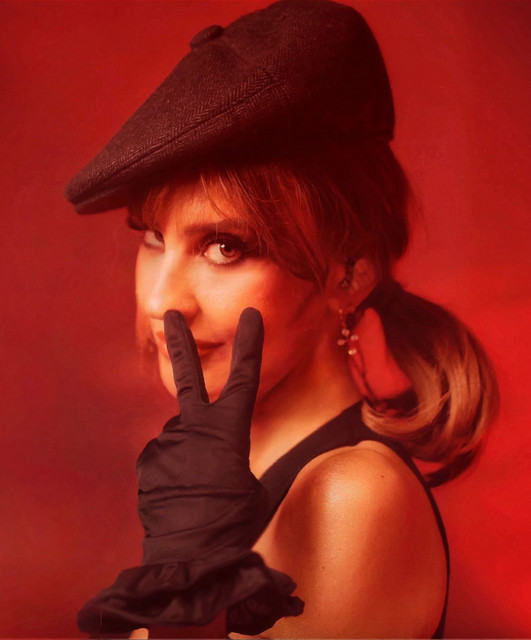
Filippa Giordano is an Italian popular music singer with a classical background who incorporates operatic music into her recordings. She comes from a musical family--both parents were opera singers, her grandfather was the last of the Sicilian storytelling street singers ("cantore"), her aunt is a classical pianist, and her brother is a cellist. As a child, she traveled with her parents during their tours. She began her musical studies at the age of five, but decided she wanted to be a dancer. At the age of nine, she began studying classical dance at Italy's National Dance Academy. Despite her family's operatic background, she prefers pop music and names Anita Baker, Whitney Houston, and George Michael as favorites. At the age of thirteen, she decided that she preferred pop singing, having been strongly influenced in this by Madonna [Ciccone] (an American rock singer who came to the fore in the mid-80s), whom she describes as "… a complete artist." Others whom she cites as influencing her decision are Michael Jackson, Stevie Wonder, Barbra Streisand, and Herb Miller. A slender woman with fashion model appearances and a sense of stage presence and movement resulting from her dance studies, Giordano had notable success as a pop and rock singer (who occasionally branched out into soul and jazz) before she was 20 years old. As is true with many young emerging artists, she had negative experiences with some of the business aspects of the music industry, such as extravagant promises for CD projects that never developed. At about that time, her grandfather, who had been a steadying influence on her life, passed away. He had urged her to develop her voice and recommended particular opera arias to her. Once he was gone, she reflected seriously on the future path of her art and career, and decided to incorporate opera into her work. Caterina Caselli, a professional singer, listened to her sing and advised her to become a pop soprano. As a result, Giordano began serious formal voice studies, and for a number of years devoted a portion of each day to developing the appropriate technique. Caselli sent a tape of Giordano singing the arias "Vissi d'arte" (from Puccini's Tosca) and "Casta Diva" (from Bellini's Norma) to David Foster, a well-known arranger and producer who had worked with Celine Dion, Whitney Houston, and Barbra Streisand. He was impressed, and began planning for an album that would mix popular songs with arrangements of opera arias. He referred her to Ennio Morricone, the famous Italian film music composer and orchestrator, who agreed she was "an artist born to sing; she is not [just] good, she is outstanding." Under producers Celso Valli and Marco Sabiu, work on the pop and opera album began in 1998 and was released in the summer of 2000 on Warner's Erato label. Giordano sang the operatic numbers in a pop voice, believing that amplification is preferable to acoustic singing, even in opera, because the microphone helps get the meaning of the words across clearly. The orchestrations generally followed those of the originals (including arias by Puccini, Bellini, Bizet, and Saint-Saëns), but had electronic instruments added for a more "contemporary" sound. Following the release of the album, Giordano undertook a standard pop tour in Italy, but also added appearances at the San Remo Festival and with Luciano Pavarotti at the famous tenor's International Festival 2000.
First discovered Aug 25, 2026, 11:58 AM