Johnnie Johnson
Charts
Tracks
Playlists
Press Mentions
Google Rankings
Overview
Not included in any known risky playlists
Monthly Listeners
Series
- Monthly Listeners
- Listeners from Playlists
- Change
Discography
Top Audiences
Top Listener Locations
 Melbourne, AU363Sydney, AU353
 São Paulo, BR278Brisbane, AU207
 Madrid, ES195
Playlist Summary
Playlist Movement
Biography & Metadata
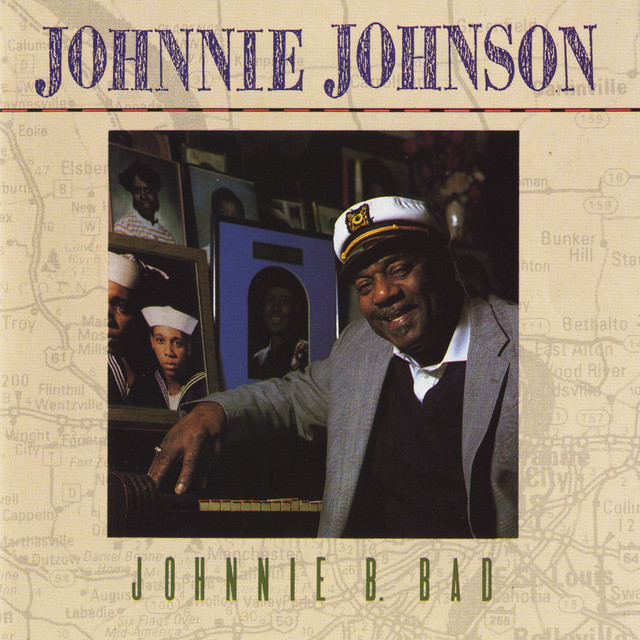
For 28 years legendary piano player Johnnie Johnson worked as a sideman to one of rock & roll's most prominent performers, Chuck Berry. Berry joined Johnson's band, the Sir John Trio, on New Year's Eve 1953, and afterward Berry took over as the group's songwriter and frontman/guitar player. On the strength of a recommendation from Muddy Waters and an audition, Berry got a deal with Chess Records. Johnson's rhythmic piano playing was a key element in all of Berry's hit singles, a good number of which Johnson arranged. Although Berry has been reluctant to admit as much, Johnson is widely regarded to be the inspiration for one of Berry's biggest hits, "Johnny B. Goode." The pair's successful partnership lasted a lot longer than most rock & roll partnerships last these days. Johnson was born July 8, 1924, in Fairmont, WV, and he began playing piano at age five, thanks to his mother, who provided the funds to purchase one and encouraged the young Johnson's interest. His parents had a good collection of 78-rpm records, including items by Bessie Smith and Ethel Waters. In his teens, he listened to the radio broadcasts of big bands, and taught himself based on what he heard from the likes of Art Tatum, Earl "Fatha" Hines, and Meade "Lux" Lewis. Johnson's goal in all of this listening and playing in his teenage years was to come up with his own distinctive style. His own somewhat ailing career got a shot in the arm with the Chuck Berry concert film Hail! Hail! Rock 'n' Roll, and by his involvement in Keith Richards' solo release with Richards' band, the X-Pensive Winos. He would go on to play and record with, among others, Eric Clapton, Bo Diddley, George Thorogood, and Aerosmith. Despite his fear of flying, the revitalized Johnson also managed to tour the world. In 2001 Johnson was inducted into the Rock & Roll Hall of Fame. Despite health complications, the ailing pianist continued to perform. In November 2004, recording began on what was to become his final project. On April 13th of 2005, at the age of 80, Johnnie Johnson passed away, just hours before his copies of Johnnie Be Eighty. And Still Bad! were delivered to his home. In a 1995 interview, Johnson explained his abilities on piano as his mother did: a gift from God. "I can hear something and keep it in my mind until such point as I can get to a piano, and then I'll play it...that is a gift, the ability to do that." Johnson's albums under his own name include Blue Hand Johnnie for the St. Louis-based Pulsar label in 1988; Johnnie B. Bad in 1991 for the Elektra American Explorer label; That'll Work in 1993 for the same label; Johnnie Be Back for the New Jersey-based MusicMasters label in 1995; and Johnson's final recording, Johnnie Be Eighty. And Still Bad! for the Cousin Moe Music label in 2005. This project contains the biographical songs "Beach Weather" and "Lucky Four," a heartfelt song about Johnson's fourth wife, Frances. ~ Richard Skelly, Rovi
First discovered Sep 17, 2026, 10:24 AM