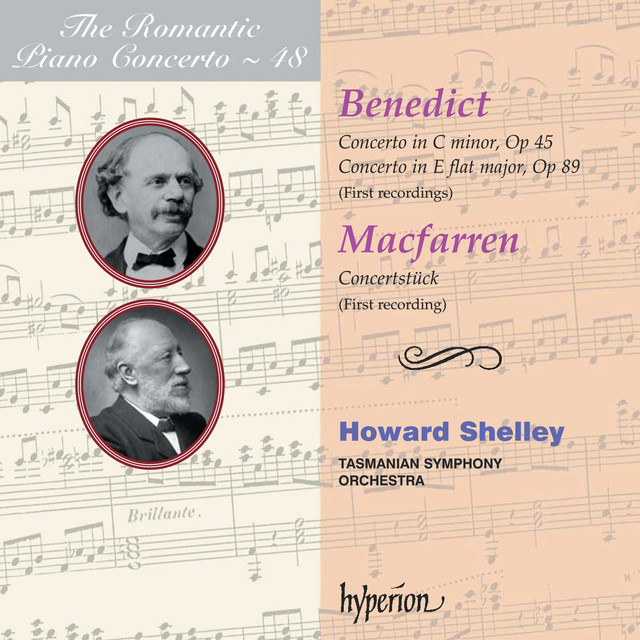
Julius Benedict
Charts
Tracks
Playlists
Press Mentions
Google Rankings
Overview
Not included in any known risky playlists
Monthly Listeners
Discography
Top Audiences
Top Listener Locations
 Tokyo, JP25Osaka, JP18
 Seoul, KR15
 Santiago, CL13
 São Paulo, BR13
Playlist Summary
Playlist Movement
Event | Playlist | Botted? | Position | Track | Happened at | |
|---|---|---|---|---|---|---|
Biography & Metadata
Few composers had a more thorough grounding in early German Romanticism than Julius Benedict, and yet the style of Romanticism he helped develop in England was more closely linked to such Italians as Rossini. Like Handel before him, Benedict was born and trained in Germany, then worked for several years in opera in Italy before settling permanently in England. As a teacher, performer, and composer, he was a significant figure in London's musical life in the middle nineteenth century. After preliminary musical instruction, at age 15 Benedict moved to Weimar to study with Hummel. He became acquainted with Beethoven, and through Hummel's influence he was able to move to Dresden in 1821 as the first pupil of Weber, who took him on as something of a surrogate son. The year 1825 found him moving to Naples to conduct opera there, as well as play piano and teach. He remained in Italy for nine years, writing operas, unexpectedly, in the manner of Rossini rather than Weber. After a brief stay in Paris, Benedict moved permanently to London in 1835. There he was the opera buffa conductor at the Lyceum Theatre, from which he progressed in 1838 to a 10-year stint as music director at Drury Lane, where he supervised such early British Romantic operas as Balfe's The Bohemian Girl, as well as writing English-language operas of his own. He accompanied soprano Jenny Lind on her American tour in 1850, but by 1852 he was back in London, again conducting opera and finding some success with his own The Lily of Killarney. This came to be regarded as the first Irish national opera, even though its composer was a German-born naturalized Englishman. He also conducted all the Norwich Festivals from 1845 to 1878 (none being held while he was in America), writing secular cantatas and oratorios for those occasions from 1860; even these works, despite their solid choral counterpoint, continued to reflect Benedict's taste for an Italian cabaletta. His piano works, in contrast, showed the strong influence of Weber and Hummel. In 1855 Benedict founded a vocal association he would conduct at the Crystal Palace for the next 10 years, and he conducted the Liverpool Philharmonic from 1876 to 1880. Amid all these performances, he composed at night, when he wasn't attending concerts by other musicians. He was knighted in 1871, and even though he performed little from his mid-seventies, he continued to teach until his death.
First discovered Oct 8, 2026, 3:07 AM