Maria Ewing
Charts
Tracks
Playlists
Press Mentions
Google Rankings
Overview
Not included in any known risky playlists
Monthly Listeners
Discography
Top Audiences
Top Listener Locations
 Mexico City, MX105
 London, GB97
 Madrid, ES93
 Prague, CZ82Barcelona, ES55
Playlist Summary
Playlist Movement
Event | Playlist | Botted? | Position | Track | Happened at | |
|---|---|---|---|---|---|---|
Biography & Metadata
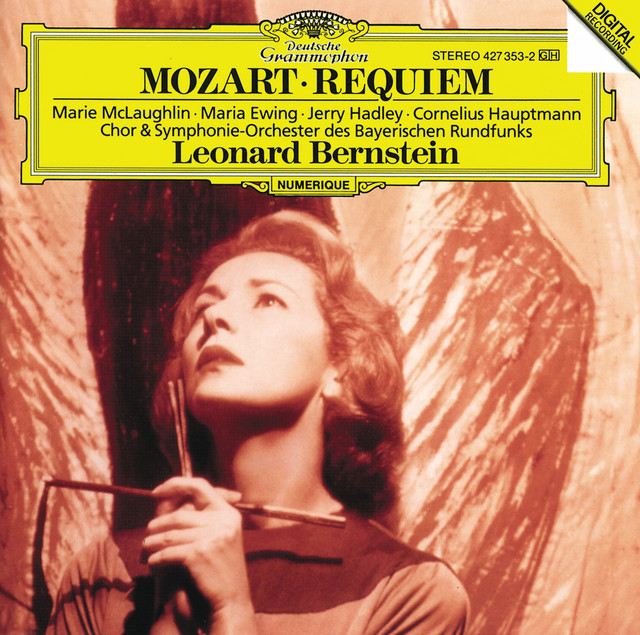
Maria Ewing was generally regarded as one of the leading soprano/mezzo-sopranos from the last quarter of the 20th century. She withdrew from operatic performances in 1997 but continued to be active into the first decade of the 2000s. While her voice could divulge a great beauty of tone in its light quality, she was better known for her versatility and intensity in performance. Her dramatic skills were outstanding, and her ability to convey an exotic or erotic sense was uncanny. Her operatic repertory was extremely broad, taking in major roles, both soprano and mezzo-soprano, of Purcell, Mozart, Poulenc, Shostakovich, and countless others. Ewing also sang jazz songs and performed a range of works in recital, but much of it from opera, including Wagner and Rossini. Ewing's recordings are available on many major labels, including Deutsche Grammophon, EMI Classics, and Chandos, among others. Ewing was born in Detroit, MI, on March 27, 1950. From 1968 until 1970, she studied music with Eleanor Steber at the Cleveland Institute of Music. She had further studies with Jennie Tourel in New York City. Ewing's major debut was at the 1973 Ravinia Festival, with the Chicago Symphony Orchestra under James Levine. Three years later, she debuted to great acclaim at both the Salzburg Festival and the Met as Cherubino in Mozart's Le nozze di Figaro. Throughout the 1980s, Ewing continued to draw critical plaudits for both her operatic performances and recitals. Her recordings were attracting attention, as well: her 1989 Mozart Requiem on Deutsche Grammophon, with Leonard Bernstein conducting, was a major success. In 1992, Ewing created a bit of controversy at Covent Garden when, as Salome, she appeared completely nude after the Dance of the Seven Veils. Ewing's 1993 appearance as Katarina Ismailova in Shostakovich's Lady Macbeth of Mtsensk at the Opéra-Bastille in Paris was another success. From 1997, Ewing limited her appearances to the recital hall. Her April 2000 Royal Albert Hall recital made many wonder why she ever gave up opera: her performance of operatic works by Rossini, Bizet, Puccini, and Wagner was hailed by British critics. In the new century, Ewing's operatic recordings appeared, if anything, with even greater frequency. The 1992 Salome, considered by many the benchmark recording, was first issued on Kultur Video in 2001. In 2005, the same label issued Ewing's highly praised Carmen from the 1985 Glyndebourne Festival. Ewing died in early 2022 from cancer. ~ Robert Cummings, Rovi
First discovered Oct 4, 2026, 10:44 PM