Alberto Erede
Charts
Tracks
Playlists
Press Mentions
Google Rankings
Overview
Not included in any known risky playlists
Monthly Listeners
Series
- Monthly Listeners
- Listeners from Playlists
- Change
Discography
Top Audiences
Top Listener Locations
 Madrid, ES139
 Mexico City, MX100
 London, GB97Barcelona, ES78
 Santiago, CL67
Playlist Summary
Playlist Movement
Event | Playlist | Botted? | Position | Track | Happened at | |
|---|---|---|---|---|---|---|
Biography & Metadata
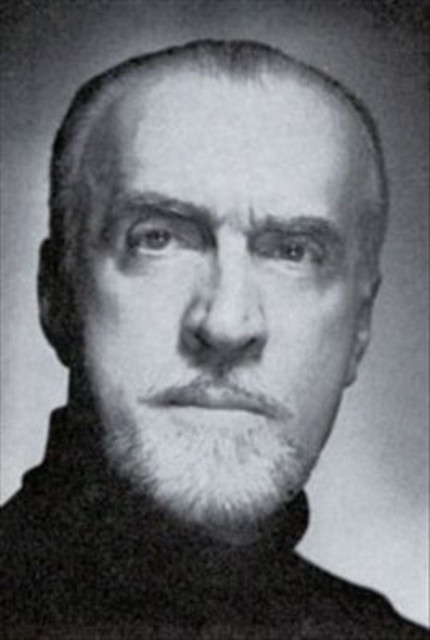
Conductor Alberto Erede was well known for his opera performances in Europe and the United Sates, especially from the 1930s until the 1960s. He began his musical studies on the piano and cello. He studied composition at the Milan Conservatory before deciding to devote his energies to conducting. He went to Basle to study conducting with Felix Weingartner, then trained under Fritz Busch at Dresden. In 1930, he made his professional conducting debut with the Accademia di St. Cecilia at Rome. In 1934, he was hired to serve on the conducting staff at the opening season of the Glyndebourne Festival, where he conducted until 1939. During this period, he was also musical director of the Salzburg Opera Guild, with whom he toured the United States in 1937. That same year, he made his debut conducting an American ensemble, with Toscanini's NBC Symphony Orchestra. This led to further engagements with NBC and in 1939, Erede conducted the broadcast premiere of Menotti's The Old Maid and the Thief. Erede returned to Italy during World War II, conducting operatic and symphonic performances. He was chief conductor of the RAI Symphony Orchestra, Turin, from 1945 to 1946. Following the war, Erede was especially active in Britain and Germany. In 1946, he was appointed musical director of the New London Opera Company at the Cambridge Theatre, a post he held for two seasons. From 1950 to 1955, he regularly conducted at the Metropolitan Opera (he was on the podium when Kirsten Flagstad gave her farewell performance in 1952 in Gluck's Alceste), and he was named general music director of the Deutsche Oper am Rhein in 1958 (the first Italian to hold this post). During the 1950s and '60s, Erede was in demand as a guest conductor, especially at Covent Garden and the Edinburgh Festival. In 1968, he led a performance of Wagner's Lohengrin at Bayreuth, making him the third Italian (after Toscanini and de Sabata) to conduct at that festival. In 1961, he took the position of chief conductor of the Gothenburg Symphony Orchestra. As late as 1988, he was still conducting at the Rome Opera. Erede's recorded legacy includes 14 complete operas, as well as discs of operatic arias by singers such as Tebaldi and Gobbi.
First discovered Oct 3, 2026, 3:04 PM