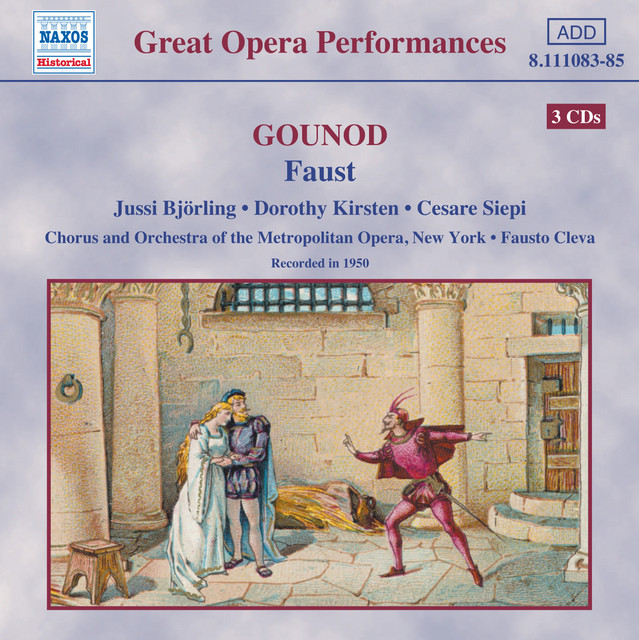
Dorothy Kirsten
Charts
Tracks
Playlists
Press Mentions
Google Rankings
Overview
Not included in any known risky playlists
Monthly Listeners
Discography
Top Audiences
Top Listener Locations
 Melbourne, AU19
 New York City, US13Sydney, AU12
 Madrid, ES11
 London, GB10
Playlist Summary
Playlist Movement
Event | Playlist | Botted? | Position | Track | Happened at | |
|---|---|---|---|---|---|---|
Biography & Metadata
Like her fellow soprano Eileen Farrell, Kirsten started in radio and throughout her career, sang both popular music and opera, but Kirsten was also one of the glamour figures at the Met, following in the footsteps of such sopranos as Geraldine Farrar and Grace Moore, who became her mentor. Her voice was not the most distinctive or powerful instruments of the time, but by focusing on the roles that best suited her, including the light to medium Puccini heroines and her most famous role, Charpentier's Louise, she had a lengthy and distinguished career, though she rarely appeared outside the United States. She studied at Julliard and began her singing career as a popular singer on radio station WINS in 1937, with a 15-minute weekly show. A friend of Grace Moore's, struck by her physical and vocal resemblance to the reigning soprano, offered to introduce her. Moore asked her to prepare two arias, and Kirsten, who had never sung opera before, learned "Mi chiamano Mimì" and "Quando me'n vo," and so impressed Moore that she bankrolled Kirsten's studies in Europe. She returned sooner than expected when World War II broke out, but Moore arranged for her opera debut at the Chicago Opera Company in the comprimario role of Poussette in Massenet's Manon in 1940. In 1944, she made her New York City Opera debut in 1944 as Violetta in Verdi's La traviata, following that with her Met debut in 1945 as Mimì in Puccini's La bohème. She continued to appear on radio, appearing with stars such as Frank Sinatra, Bing Crosby, Nelson Eddy, and Perry Como, and she made two films, Mr. Music, in 1950, and the famous The Great Caruso, in 1951, co-starring with Mario Lanza. Her last stage appearance was at the Met, as Tosca, in 1976.
First discovered May 15, 2026, 2:49 PM