Max Steiner
Charts
Tracks
Playlists
Press Mentions
Google Rankings
Overview
Not included in any known risky playlists
Monthly Listeners
93,691 – 94,580
Discography
Genres
Spotify has not assigned genres to this artist yet
Top Audiences
Top Listener Locations
 Mexico City, MX1,096
 London, GB1,087
 Santiago, CL1,051
 Madrid, ES992
 Berlin, DE932
Playlist Summary
Playlist Movement
Event | Playlist | Botted? | Position | Track | Happened at | |
|---|---|---|---|---|---|---|
Biography & Metadata
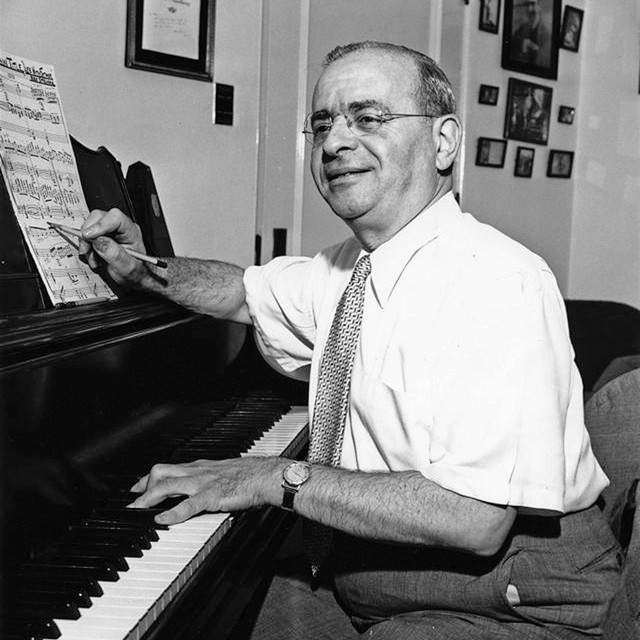
Austrian-born film composer Max Steiner was the grandson of the musical impresario who discovered Strauss and brought Offenbach to Vienna. Growing up with a rich heritage of opera and symphony all about him, Steiner developed into a musical prodigy; at the age of thirteen he graduated from the Imperial Academy of Music, completing the course in one year and winning the Gold Medal of the Emperor. Already a composer at 14 and conductor at 16, Steiner moved from Austria to England in 1905, remaining there to conduct at His Majesty's Theatre until 1914. With the outbreak of the war, Steiner emigrated to America, where he kept busy with Broadway musicals and operettas. One of his most beneficial American jobs was to compose the music to be conducted during screenings of the silent film The Bondman (1915); he became a friend of William Fox, the film's producer, giving Steiner early entree into the Hollywood that would so gainfully employ him in later years. In 1929, he was brought to fledgling RKO Radio Studios to orchestrate the film adaptation of Ziegfeld's Rio Rita (1929). Always confident in his talents, Steiner was realistic enough to understand that he was hired by RKO because he cost a tenth of what someone like Stowkowski would charge. While at RKO, Steiner developed his theory that music should be a function of the dramatic content of a film, and not merely background filling. His scores for such films as Symphony of Six Million (1932), The Informer (1935), and, especially, King Kong (1933) are carefully integrated works, commenting upon the visual images, augmenting the action, and heightening the dramatic impact. While Steiner's detractors would characterize his spell-it-out technique as "Mickey Mousing" (in reference to the music heard in animated cartoons), producers, directors, and stars came to rely upon Steiner to make a good film better, and a great film superb. After 111 pictures at RKO, Steiner was hired by David O. Selznick, who assigned the composer to write the score for Gone with the Wind (1939). Virtually 75 percent of this 221-minute epic required music of some sort, and Steiner rose to the occasion with what many consider his finest work. One concept refined in Gone with the Wind was to give each important character his or her own separate musical motif -- quite an undertaking when one realizes how many speaking parts there were in the film. Around that time Steiner began working at Warner Bros, where he penned the studio's famous "opening logo" fanfare and also provided evocative scores for such classics as Now Voyager (1942), Casablanca (1942) and Mildred Pierce (1945). A proud, vain man, Steiner frequently found himself the butt of good-natured practical jokes from his fellow composers, but at Oscar time it was usually Steiner who had the last laugh. Steiner remained active until 1965, contributing scores to The Caine Mutiny (1954), The Searchers (1955), A Summer Place (1959) and many other films. It was only at the very end of his career, with such retrogressive scores as Youngblood Hawke (1964), that Max Steiner's once-revolutionary technique began to sound old hat.
First discovered Aug 23, 2026, 6:36 PM