Ensemble Pygmalion
Charts
Tracks
Playlists
Press Mentions
Google Rankings
Overview
Not included in any known risky playlists
Monthly Listeners
Series
- Monthly Listeners
- Listeners from Playlists
- Change
Discography
Top Audiences
Top Listener Locations
 Amsterdam, NL1,352
 London, GB992
 Paris, FR739
 Mexico City, MX643
 Berlin, DE561
Playlist Summary
Playlist Movement
Event | Playlist | Botted? | Position | Track | Happened at | |
|---|---|---|---|---|---|---|
Biography & Metadata
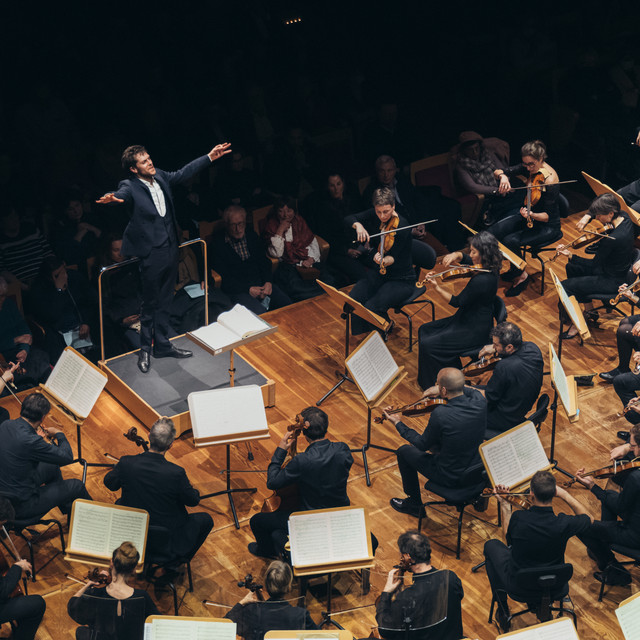
The historical performance ensemble Pygmalion is unusual in having been established as a joint choral-instrumental group. This background has equipped the group not only for choral music of various periods but also for the exploration of little-known operatic repertory. Pygmalion was founded in 2006 by singer-conductor-violinist Raphaël Pichon, who studied at the Conservatoire à Rayonnement Régional and Conservatoire National Supérieur de Musique de Paris and went on to sing countertenor parts under top conductors on the early music scene: Jordi Savall, Gustav Leonhardt, and Ton Koopman, among others. The group has also been referred to in French as Ensemble Pygmalion. Pygmalion has had an unusually broad repertory temporally, running from the complex of musical forms that helped birth opera in the musical productions sponsored by the Medici family (on their 2017 release Stravaganza d'Amore) forward to Mendelssohn and Berlioz and even Wagner in a survey of musical treatments of the Rhine Maidens. The group recorded several albums for Alpha, making its debut in 2008 with two of Bach's Missae Breves. It moved to Harmonia Mundi in 2014, issuing a recording of Bach's rarely performed Köthener Trauermusik, BWV 244a. It has performed lesser-known works of Bach as well as Mozart's Mass in C minor, K. 427, and other music associated with the two sisters, Aloysia and Constanze Weber, with whom Mozart was romantically involved (eventually marrying the latter). An album based on the two sisters was released with soprano Sabine Devieilhe in 2015. The lion's share of the group's efforts, however, have been directed toward opera, especially since it became the associate ensemble at the Opéra Bordeaux. That relationship resulted in a critically acclaimed performance of Rameau's rarely performed and editorially troublesome Dardanus in 2015. In 2017, Pygmalion was named the associate ensemble at the Opéra Comique in Paris for a three-year term. The group has continued to issue albums annually on Harmonia Mundi, some of them such as Enfers (2018) and Libertà! (2019), are thematic in nature. In 2020, Pygmalion issued the album Johann Sebastian Bach: Motets on Harmonia Mundi. The group has won major recording awards, including a Gramophone Award in 2016, a CD of the Month nod from Opernwelt, and the Diapason d'Or de l'Année. Pygmalion released a recording of Bach's Matthäus-Passion, BWV 244, in 2022. The following year, the group returned with a recording of Monteverdi's Vespro della Beata Vergine. ~ James Manheim, Rovi
First discovered Sep 11, 2026, 10:01 PM