Boston Baroque
Charts
Tracks
Playlists
SEO
Press Mentions
Overview
Not included in any known risky playlists
Monthly Listeners
Discography
Genres
Spotify has not assigned genres to this artist yet
Top Audiences
Top Listener Locations
 London, GB71
 New York City, US55
 Madrid, ES36
 Vienna, AT34
 Paris, FR32
Playlist Summary
Playlist Movement
No activity found
This artist's playlist additions and removals will appear here.
Biography & Metadata
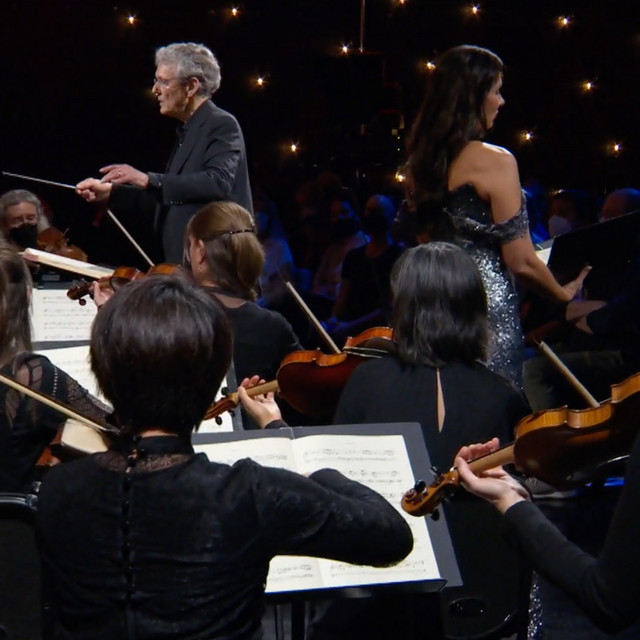
When it was founded in 1973, Boston Baroque was the first major period-instrument orchestra in the U.S. specializing in Baroque music. By general consensus, it remains one of the best, with a long record of performances and recordings of novel and interesting repertory. Boston Baroque has been directed through its entire lifetime by conductor and harpsichordist Martin Pearlman, who has also unearthed new works and prepared them for performance. The group's original name was Banchetto Musicale, taken from a collection of instrumental dances by Johann Hermann Schein. At the time, period-instrument performances, especially of Baroque music, were rare in the U.S. and by no means dominant in Europe. In the 1980s, the group gave several major American premieres, including the first Boston performance of Handel's Messiah on period instruments in 1981 (an event that has become an important annual tradition in Boston), the first American performance of Rameau's opera Zoroastre, and American period-instrument premieres of Mozart's Don Giovanni and Beethoven's Symphony No. 7 in A major, Op. 92, and Violin Concerto in D major, Op. 61. Messiah became Boston Baroque's first recording after signing with the Telarc label in 1992, an association that lasted until heavy staff cutbacks hit that label in the 2010s. Significant performances and recordings, many involving extensive research by Pearlman, included the modern-day world premiere of Der Stein der Weisen (1998), a collaborative comic German opera that included contributions by Mozart, a rare cycle of Monteverdi's three surviving operas, semi-staged, the world's first period-instrument performance of the completion of Mozart's Requiem, K. 626, by Robert Levin, and Lost Music of Early America, featuring music of North Carolina's Moravian communities. The orchestra's repertoire extends as far forward as Beethoven, many of whose short works they have been the first to perform on historical instruments, and Cherubini. In addition to regular series performances in Boston, the orchestra has toured across the U.S. and made two tours of Poland, in 2003 and 2015. Boston Baroque signed with Scotland's Linn label and released a recording of Haydn's Lord Nelson Mass in 2013. In 2018 they backed Baroque violinist Christina Day Martinson on a Linn recording of Heinrich Ignaz von Biber's Mystery Sonatas. Boston Baroque has been nominated for three Grammy awards, for recordings of Messiah, Monteverdi's Vespers of 1610, and Bach's Mass in B minor, BWV 232.
First discovered Aug 23, 2026, 7:51 AM