Luigi Alva
Charts
Tracks
Playlists
Press Mentions
Google Rankings
Overview
Not included in any known risky playlists
Monthly Listeners
Series
- Monthly Listeners
- Listeners from Playlists
- Change
Discography
Top Audiences
Top Listener Locations
 Mexico City, MX266
 Madrid, ES243
 Santiago, CL239
 Paris, FR130Barcelona, ES112
Playlist Summary
Playlist Movement
Event | Playlist | Botted? | Position | Track | Happened at | |
|---|---|---|---|---|---|---|
Biography & Metadata
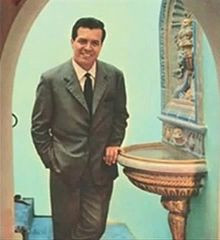
A fixture of Italy's La Scala opera, where he performed some 330 times as Count Almaviva in Rossini's Il barbiere di Siviglia alone, Luigi Alva was among the most beloved of the pure bel canto singers active in the later 20th century. He specialized in Rossini, Mozart, Donizetti, and the other composers of bel canto opera but also incorporated Verdi and some more contemporary operas into his repertory. He was mentored by the soprano Maria Callas and left a large recorded repertory with her and other top singers. Recordings featuring Alva, including a 1968 recording of Il barbiere di Siviglia, continued to appear until his death in 2025. Alva, in full Luis Ernesto Alva y Talledo, was born in Paita, Peru, on April 10, 1927. After service in the Peruvian navy, he attended the Conservatorio Nacional de Música in Lima and studied with Rosa Mercedes Ayarza. In 1949, he made his debut in Lima in the zarzuela Luisa Fernanda by Federico Morena Torroba. He followed that in 1951 with an appearance at Teatro Municipal de Lima as Beppe in Leoncavallo's Pagliacci. Electing to continue his education, Alva traveled to Milan, Italy, in 1953 for studies with Emilio Ghirardini and Ettore Campogalliani at La Scuola di Canto, the academy associated with La Scala. He stayed on in Italy, making his debut at the Teatro Novo as Alfredo in Verdi's La Traviata in 1954. In 1956, he made his first appearance as Count Almaviva in Il barbiere di Siviglia at La Scala, to be followed by hundreds more. An early recording featured him in that role in 1958, opposite Callas, with England's Philharmonia Orchestra; that recording was later issued by EMI Classics in its "Great Recordings of the Century" series. Alva's light tenor was a fixture at La Scala for the better part of four decades, with his roles centering on the bel canto composers and Mozart. He appeared abroad in various countries, including England, where he made his debut at the Glyndebourne Festival as Nemorino in Donizetti's L'elisir d'amore in 1961, and the U.S., where he appeared as Fenton in Verdi's Falstaff in 1964 and went on to give more than 100 performances. Alva was well-represented on operatic recordings and also issued the recital album Mozart: Complete Concert Arias in 1990. He occasionally appeared in new works, including La donna è mobile by Riccardo Malipiero (nephew of Gian Francesco). Alva remained active in Peru, founding the Asociación Prolírica del Perú in 1980 and returning to the country to live and teach after his retirement in 1989. He founded the Premio Luigi Alva prize for young singers. A 1968 recording of Il barbiere di Siviglia conducted by Claudio Abbado was reissued in 2023 by the NAR Classical label. By that time, his recording catalog comprised some 125 albums. Alva died in Mariano Comense, Italy, on May 15, 2025. ~ James Manheim, Rovi
First discovered Oct 8, 2026, 5:28 PM