Erich Wolfgang Korngold
Charts
Tracks
Playlists
Press Mentions
Google Rankings
Overview
Not included in any known risky playlists
Monthly Listeners
Series
- Monthly Listeners
- Listeners from Playlists
- Change
Discography
Genres
Spotify has not assigned genres to this artist yet
Top Audiences
Top Listener Locations
 London, GB2,103
 Taipei, TW1,872
 Mexico City, MX1,757
 New York City, US1,585
 Madrid, ES1,516
Playlist Summary
Playlist Movement
Biography & Metadata
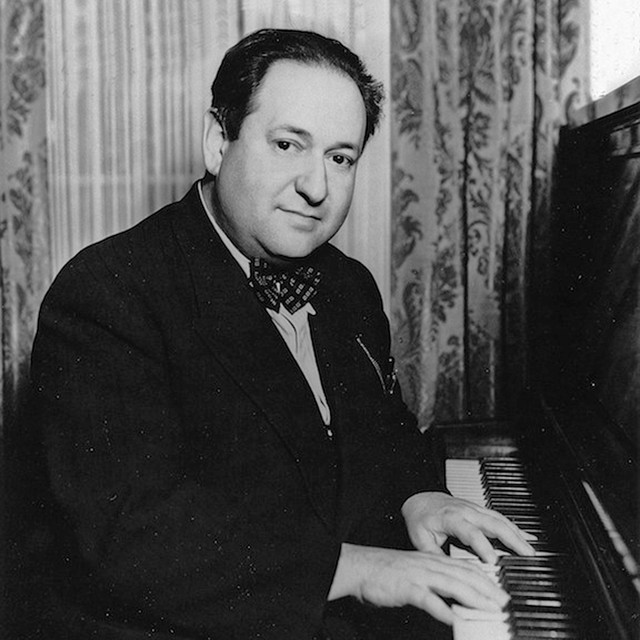
Erich Wolfgang Korngold's career bridged astonishing gaps in history and music -- from the final years of Imperial Austria, when he was hailed as "a new Mozart," to Hollywood in the heyday of the studio system, to the darkened era of postwar Europe. In Vienna of the 1920s, his name evoked the best that engagingly melodic, tonal music had to offer in the concert hall or the opera house; in Hollywood he was synonymous with the swashbucklers of Errol Flynn. Born in Brünn, in Moravia (now Brno, Czechoslovakia) he was the son of Julius Korngold, one of the most influential music critics in Vienna. Korngold was beating time with a spoon by the age of three, playing basic melodies at age 5, and composing at age 6. He was encouraged by Gustav Mahler to pursue his musical studies, and his teachers included Alexander Von Zemlinsky. He'd written a Piano Sonata in D minor and a ballet entitled The Snowman before he was 10, and at 13, he saw his second piano sonata premiered by Artur Schnabel. He wrote his first two operas, Der Ring des Polykrates and Violanta, in his teens, and in 1920, at 23, Korngold completed his most celebrated operatic work, Die tote Stadt; it was an immediate hit in Austria and Germany, and quickly entered the repertory of opera companies around the world. The 1920s saw Korngold add theatrical music to his activities -- his adaptation of Johann Strauss' Eine Nacht in Venedig was a worldwide success, as was his Strauss pastiche, Waltzes in Vienna. In 1929, Korngold was commissioned by the producer Max Reinhardt to work on a new stage production of Die Fledermaus. Reinhardt was pleased with the results and impressed with Korngold's work; three years later, when Warner Bros. studios engaged Reinhardt to adapt his stage version of A Midsummer Night's Dream into a film, he engaged Korngold to arrange Felix Mendelssohn's music for the movie. The resulting film was a financial failure, but the studio was impressed with what Korngold had done with the music. He was offered a contract, which he accepted after some slight hesitation. His first film score, for Captain Blood (1935), delighted both the studio's executives and millions of filmgoers -- Korngold's music added a richness to the sweeping tale of heroism and triumph over injustice that startled viewers with its inventiveness, adding an extra dimension to the drama, and excitement and beauty of the movie. Over the next two years, Korngold turned in dazzling musical scores for Anthony Adverse (1936), Green Pastures (1936), and The Prince and the Pauper (1937). In late 1937, he returned to Vienna in hope of premiering a new operatic work, but the growing Nazi influence over politics and art made it impossible for Korngold and his family (all of whom were Jewish) to remain. In early 1938, he accepted a new contract offer from Warner Bros. and got himself and his family to America just before Germany annexed Austria. Korngold spent the next nine years in Hollywood among the movie colony's artistic elite, able to pick and choose his films and always doing superb work. Korngold turned in a dozen memorable scores that defined elegance in film music -- from costumed adventures like The Sea Hawk (1940) to serious drama such as Kings Row (1942). Following the end of World War II, he returned to Austria and got a harsh reception from a populace resentful of his years in Hollywood, and derision from critics over his melodic, tonal music. Korngold lived his final years comfortably in California, in near complete artistic eclipse.
First discovered Aug 22, 2026, 10:44 PM