Jules Barbier
Charts
Tracks
Playlists
Press Mentions
Google Rankings
Overview
Not included in any known risky playlists
Monthly Listeners
Discography
Genres
Spotify has not assigned genres to this artist yet
Top Audiences
Top Listener Locations
 Sydney, AU35
 Berlin, DE30
 London, GB30Frankfurt am Main, DE27Cologne, DE26
Playlist Summary
Playlist Movement
Event | Playlist | Botted? | Position | Track | Happened at | |
|---|---|---|---|---|---|---|
Biography & Metadata
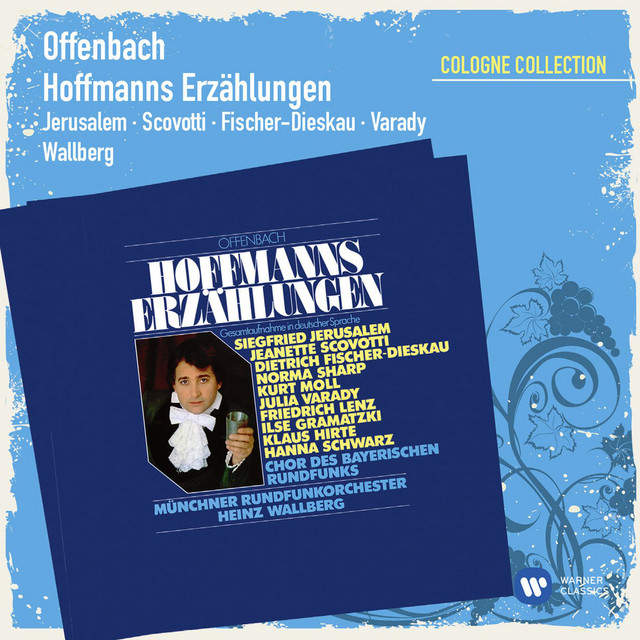
Before he wrote the libretto for what would for several decades be the world's most popular opera -- Gounod's Faust -- Jules Barbier began by writing frivolous little comic plays. Barbier was always very much a man of his time. His early plays were lighthearted and topical, adorned with songs whose lyrics were grafted onto pop tunes. Later in life, he collaborated with the most prominent French composers of opera and operetta, crafting librettos that never challenged composers or audiences with deep philosophy, meeting the public's expectations with conventional plots and characters. With his keen understanding of the taste of the masses, if he were alive today, he'd be writing for television. This is not to say Barbier's work was necessarily small scaled. For example, his 1873 Jeanne d'Arc sprawled across five acts and was graced with incidental music by Gounod. The play was, in part, the basis of the libretto of Tchaikovsky's The Maid of Orléans. Barbier's claim to lasting fame is his libretto for Gounod's Faust (1859). Although the text has been criticized for its banal adherence to convention and oversimplification of Goethe's source material, Barbier exhibited a sure understanding of his audience -- a largely unintellectual crowd that would sit still for little more than a modest plot, on which could be hung pretty tunes sung by glamorous soloists. Not surprisingly, Barbier gave Shakespeare's Hamlet a happy ending for its 1868 treatment by Ambroise Thomas. Barbier collaborated on the bulk of his opéra comique librettos, starting with that for Massé's Galathée in 1852 with Michel Carré. The latter's death in 1872 didn't exactly end the collaboration; work the two had done together was showing up as late as 1881 in Offenbach's Les Contes d'Hoffmann. After 1872, Barbier worked with several other partners, including, toward the end of his life, his son Pierre. At the height of his career, Barbier provided librettos for Gounod (including Roméo et Juliette and a number of now-obscure efforts), Meyerbeer ("Le pardon de Ploërmel"), Bizet (La Guzla de l'émir), Thomas (Mignon and others), Saint-Saëns (Le timbre d'argent), Anton Rubinstein (Nero), and a great many minor figures. Barbier's work is held in low esteem today for the very reasons it was popular in nineteenth century France: its simplicity, directness, and determination to stay out of the way of the music and singers.
First discovered Sep 13, 2026, 1:58 PM