Isaac Watts
Charts
Tracks
Playlists
Press Mentions
Google Rankings
Overview
Not included in any known risky playlists
Monthly Listeners
Discography
Genres
Spotify has not assigned genres to this artist yet
Top Audiences
Top Listener Locations
 Salt Lake City, US105
 Lagos, NG101
 Singapore, SG81Chicago, US80Houston, US78
Playlist Summary
Playlist Movement
Event | Playlist | Botted? | Position | Track | Happened at | |
|---|---|---|---|---|---|---|
Biography & Metadata
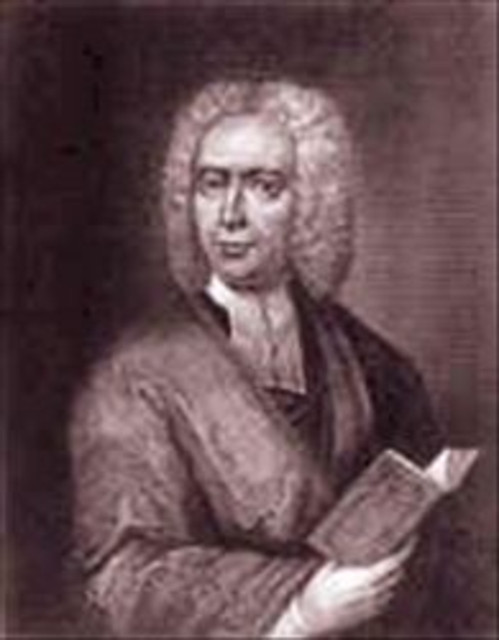
Often called the Father of English Hymnody, Isaac Watts profoundly influenced the church music of both England and America. Frail and ugly of body, but precocious and sharp of intellect, Watts singlehandedly may have shifted the practice in English-speaking Protestant churches from metrical Psalms to congregational hymns. Watts was born in Southampton, England, the eldest of nine children. His father, a well-educated and outspoken Congregationalist deacon, was in prison for his nonconformist views at the time of Isaac's birth. Isaac quickly showed his father's intellectual strength, learning Latin at the age of five, Greek at nine, French at 11, and Hebrew at 13. Watts eventually became a Congregational minister himself, continuing his father's vigorous Dissent from the Church of England. Though nearly an invalid for the last 30 years of his life, Watts proved a prolific writer, publishing 29 theological treatises, three volumes of sermons, several texbooks on logic, and a variety of essays on psychology and other scholarly pusuits. The English nation recognized his importance by erecting a posthumous monument in Westminster Abbey. Watts is best known to later centuries for his hymn writing. Apparently, he began rhyming at a very young age, and even developed the annoying habit of carrying on domestic conversations in verse. The young Watts was once lamenting the ponderous and archaic psalm translations sung in the English churches: they resulted in dreary and uninspired performance by the congregation. His father reputedly challenged him to write better poetry for worship; in response, Watts composed a new hymn each Sunday for two years. Watts would go on to produce a national vogue for such new "hymns of human composure." He published three anthologies of poetry for singing in church, the Hymns of 1707, Divine Songs for Children (1715, the first hymnal ever written for young people), and the Psalms of David Imitated (1719). In the latter volume, Watts re-translated the Psalms with the stated intent of infusing them with a "New Testament message and style." His vibrant and affective poetry not only changed the course of church music in England, but was also imported to similar churches in the Americas (Congregational, Presbyterian, and Baptist) a generation later. A large number of his hymns -- "O God, Our Help in Ages Past," "When I Survey the Wondrous Cross," "I Sing the Mighty Power of God," "Jesus Shall Reign," and "Joy to the World" -- remain in currency in most English hymnals worldwide.
First discovered Aug 24, 2026, 7:21 AM