Byron Stingily
Charts
Tracks
Playlists
Press Mentions
Google Rankings
Overview
Included in high risk playlists
Monthly Listeners
Discography
Top Audiences
Top Listener Locations
 London, GB8,284Manchester, GB3,220
 Sydney, AU1,681
 Johannesburg, ZA1,668Melbourne, AU1,539
Playlist Summary
Playlist Movement
Event | Playlist | Botted? | Position | Track | Happened at | |
|---|---|---|---|---|---|---|
Biography & Metadata
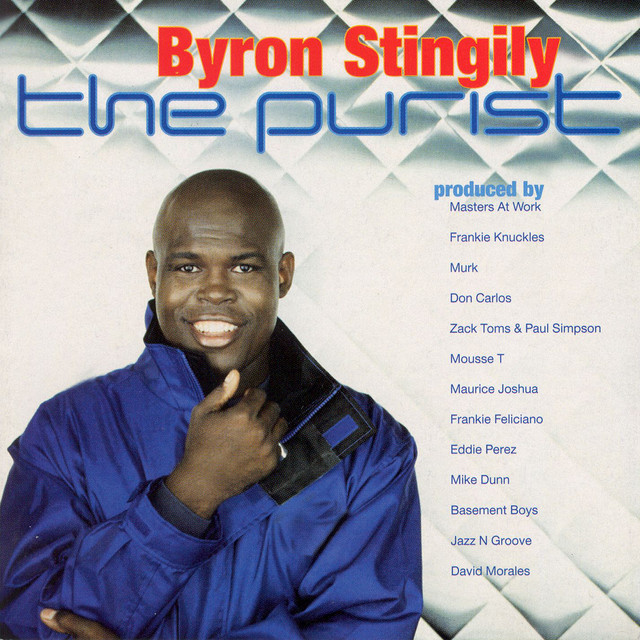
The lead vocalist for Ten City and later a solo star in his own right, Byron Stingily had one of the most beautiful voices in house music, a sweet and impeccably clear high register akin to Smokey Robinson or disco celebrity Sylvester. A singer since the age of five, Stingily grew up on the west side of Chicago, and though he attended Blackburn College in rural Illinois during the early '80s, he became a part of the Windy City's exploding house scene midway through the decade. He recorded his first single "Funny Love" in 1985, and licensed the song to Trax Records. After meeting up with house maestro Marshall Jefferson, Stingily recorded two early Chicago classics, "Can't Stay Away" and "Just a Little Bit," and impressed many as the support slot for Jefferson's visit to New York City. While in town, Jefferson and Stingily decided to make the rounds at the major labels, and impressed Atlantic Records enough that the label offered them a contract before they had even formed a group. By 1988, the pair had recruited guitarist Herb Lawson and DJ-turned-keyboardist Byron Burke to form Ragtyme. The trio released "Devotion" and "Right Back to You," later changing their name to Ten City and recording their debut album Foundation. Though the group recorded two more albums for Atlantic (all of which did well on the club scene but failed commercially), the label dropped them by 1993. Ten City then wrote a song with Masters at Work titled "Fantasy," and though the single received massive club play, it was over a year before their fourth album That Was Then, This Is Now appeared. By that time, the buzz had died down and Ten City rapidly disintegrated. Though Byron Stingily was offered a solo contract by Columbia, he opted to return to the independents and began working on his composing and production skills: he worked with Kim English for the singles "Nitelife" and "Time for Love" plus Michael Watford and Maysa Leak (of Incognito). Stingily began recording for Nervous in 1996 with two singles, "Love You the Right Way" and "Don't Fall in Love." The following year both "Sing-A-Song" and "Get Up" became rather large garage-crossover hits, and in 1998, Stingily released his debut solo full-length The Purist. Club Stories followed two years later. ~ John Bush, Rovi
First discovered Oct 29, 2025, 10:03 PM