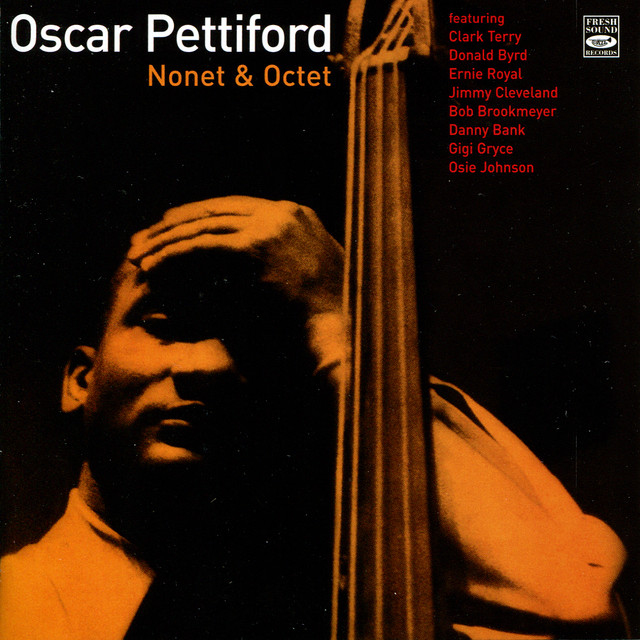
Oscar Pettiford
Charts
Tracks
Playlists
SEO
Press Mentions
Overview
Not included in any known risky playlists
Monthly Listeners
Discography
Top Audiences
Top Listener Locations
 New York City, US210Los Angeles, US178
 Tokyo, JP151Chicago, US144
 London, GB141
Playlist Summary
Playlist Movement
No activity found
This artist's playlist additions and removals will appear here.
Biography & Metadata
Oscar Pettiford was (along with Charles Mingus) the top bassist of the 1945-1960 period, and the successor to the late Jimmy Blanton. In addition, he was the first major jazz soloist on the cello. A bop pioneer, it would have been very interesting to hear what Pettiford would have done during the avant-garde '60s if he had not died unexpectedly in 1960. After starting on piano, Pettiford switched to bass when he was 14 and played in a family band. He played with Charlie Barnet's band in 1942 as one of two bassists (the other was Chubby Jackson) and then hit the big time in 1943, participating on Coleman Hawkins' famous "The Man I Love" session; he also recorded with Earl Hines and Ben Webster during this period. Pettiford co-led an early bop group with Dizzy Gillespie in 1944, and in 1945 went with Coleman Hawkins to the West Coast, appearing on one song in the film The Crimson Canary with Hawkins and Howard McGhee. Pettiford was part of Duke Ellington's orchestra during much of 1945-1948 (fulfilling his role as the next step beyond Jimmy Blanton), and worked with Woody Herman in 1949. Throughout the 1950s, he mostly worked as a leader (on bass and occasional cello), although he appeared on many records both as a sideman and a leader, including with Thelonious Monk in 1955-1956. After going to Europe in 1958, he settled in Copenhagen where he worked with local musicians, plus Stan Getz, Bud Powell, and Kenny Clarke. Among Pettiford's better-known compositions are "Tricotism," "Laverne Walk," "Bohemia After Dark," and "Swingin' Till the Girls Come Home." ~ Scott Yanow
First discovered Sep 3, 2026, 12:47 PM