Martha Mödl
Charts
Tracks
Playlists
Press Mentions
Google Rankings
Overview
Not included in any known risky playlists
Monthly Listeners
Discography
Genres
Spotify has not assigned genres to this artist yet
Top Audiences
Top Listener Locations
 Munich, DE34
 Muncie, US26Berlin, DE24
 London, GB19Hamburg, DE18
Playlist Summary
Playlist Movement
Event | Playlist | Botted? | Position | Track | Happened at | |
|---|---|---|---|---|---|---|
Biography & Metadata
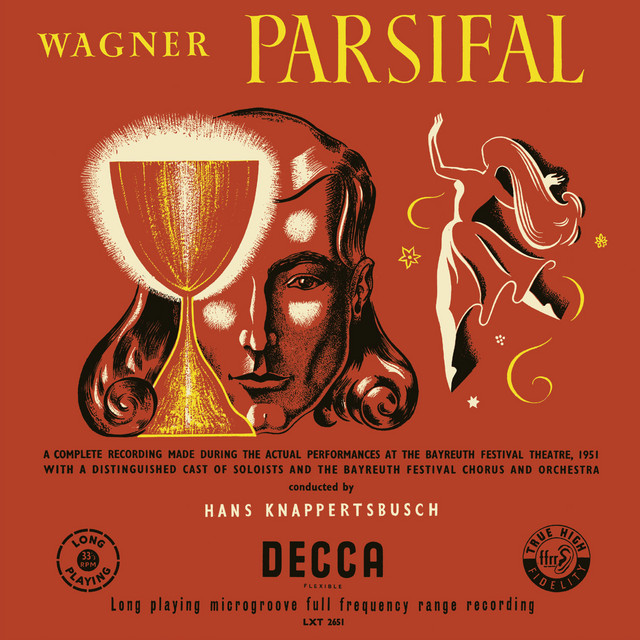
When Martha Mödl died at the age of 89, she had still not retired. The mezzo soprano turned dramatic soprano turned mezzo once more was a stage creature of rare magnetism. After a late start in music, she sang principal roles in the mezzo repertory during most of her thirties, but made a leap into the front rank of singing actresses with her engagement at the Bayreuth Festival, beginning with its re-opening in 1951. She alternated the three Brünnhildes and Isolde with Astrid Varnay and created a complex, tortured Kundry in Wieland Wagner's revolutionary production of Parsifal during the festival's first postwar season. Her ascent into dramatic soprano roles came gradually, first in such equivocally placed roles as Lady Macbeth and Venus, later in the higher reaches of the Ring heroines, and Isolde. While her beautiful, but softer timbre lacked the cutting edge of a Varnay, Nilsson, or Grob-Prandl, and failed her by the end of many performances, she brought a supreme measure of womanliness to her work. The all-out passion of her Isolde, captured live at the 1953 Bayreuth Festival, shares the top-most level of Wagner performance, along with more vocally reliable artists such as Leider, Flagstad, and the aforementioned trio of contemporaries. Mödl studied at the Nuremberg Conservatory and made her debut as Hänsel in Remscheid in 1942. She was then 30 and had spent her earlier years as a secretary for a large business operation. That same year in Remscheid, she also sang Azucena, evidence that even at that point in her career, her vocal placement was somewhat in question. From 1945 to 1949, she was engaged at nearby Düsseldorf, where her roles included such diverse ladies as Dorabella and Klytemnestra, Marie (Wozzeck), and Eboli. Another of the roles in which she enjoyed success was Carmen and the gypsy subsequently served for her debut at Covent Garden in October 1949. Her London Carmen, which she had re-learned in English, was deemed surprisingly successful. Her Kundry in Berlin that same year also won high praise. With her slender figure, immense and expressive eyes, and gift for powerful stillness, Mödl perfectly fitted Wieland Wagner's concept of simplified staging. She sang at Bayreuth until 1967 and her fame there led to other important engagements in Europe: Stuttgart, Edinburgh, and Vienna (where her Leonore re-opened the restored Staatsoper in 1955). She was admired by Wilhelm Furtwängler and with him recorded a complete Ring for Italian Radio, Fidelio, and a studio Die Walküre completed shortly before the conductor's death in 1954. Mödl's Metropolitan Opera career lasted just three seasons and a mere dozen performances. The high-lying Siegfried Brünnhilde with which she made her first appearance on January 30, 1957, was the most problematic of the three Ring heroines and her modern style of acting seemed out of place in the aging Metropolitan production. By that time, too, and in two following seasons, she was experiencing difficulties with her high register. By the early '60s, she had dropped back into mezzo roles, her voice sounding increasingly frayed, but her histrionic acuity entirely intact. In subsequent years, she sang mezzo parts large and small and even presented herself in Fiddler on the Roof. She participated in premieres of works by Von Einem, Eötvös, Fortner, Cerha, Klebe, and Reimann. Just weeks before her death, she had been acclaimed as the Nurse in a Berlin production of Boris Godunov.
First discovered Aug 24, 2026, 6:51 AM