Robert Moran
Charts
Tracks
Playlists
Press Mentions
Google Rankings
Overview
Not included in any known risky playlists
Monthly Listeners
Series
- Monthly Listeners
- Listeners from Playlists
- Change
Discography
Top Audiences
Top Listener Locations
 London, GB21
 Melbourne, AU12Sydney, AU9
 Madrid, ES8
 Toronto, CA8
Playlist Summary
Playlist Movement
Biography & Metadata
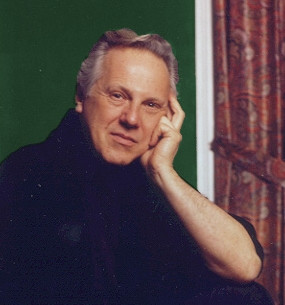
The career of American composer Robert Moran has been broadly eclectic, ranging from the most extreme avant-garde experiments to more conventional forms like opera, ballet, choral, and orchestral music. Stylistically his work has likewise spanned a wide spectrum, incorporating serialism, conceptual pieces, minimalism, neo-Romanticism, and post-Modernism. He has tended to work on a large scale, concentrating on operas, ballets, and performance pieces featuring thousands of participants. Moran's teachers included Hans Erich Apostel, Luciano Berio, and Darius Milhaud. He began teaching at the San Francisco Conservatory in 1963 but divided his time between American and European projects. He came to public attention in the late 1960s and early 1970s for three sound-texture pieces that were intended to include the entire population of the cites of San Francisco (39 Minutes for 39 Autos, 1969), Bethlehem, PA (Hallelujah, 1971) and Graz, Austria (Pachelbel Promenade, 1975). Other large-scale works from the period include Emblems of Passage (1974), for 300 teenage musicians, performed in San Francisco, and The Eternal Hour (1974), for six choruses and six orchestras, performed in Berlin, where he was the city's composer-in-residence. In 1985, he and Philip Glass jointly composed the music for the opera The Juniper Tree, which has had multiple American and European productions. Other operas include Desert of Roses (1990) and The Dracula Diary (1993) produced by the Houston Grand Opera, From the Towers of the Moon (1990), commissioned and produced by the Minnesota Opera, and Night Passage (1994), commissioned and performed by the Seattle Men's Chorus. Besides his position at the San Francisco Conservatory, Moran has taught or served as composer-in-residence at Portland State University and Northwestern University, where he conducted the new music ensemble. At Northwestern he organized The Waltz Project (1976-1977), which featured contributions by 25 contemporary composers, and which has gone on to be choreographed by a number of dance companies. Other works composed for dance, or which were later picked up by choreographers, include Three Dances (1983-1986), Open Veins (1986), Requiem: Chant du Cygne (for four spatially separated choirs and chamber orchestras, 1989), 32 Cryptograms for Derek Jarman (1994), Rocky Road to Kansas (2002), and Alice (2011).
First discovered Oct 25, 2026, 6:30 AM