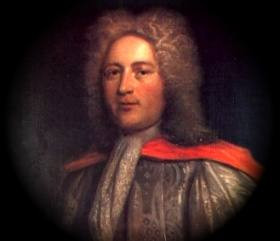
William Croft
Charts
Tracks
Playlists
Press Mentions
Google Rankings
Overview
Not included in any known risky playlists
Monthly Listeners
15,225 – 15,499
Discography
Genres
Spotify has not assigned genres to this artist yet
Top Audiences
Top Listener Locations
 Lagos, NG704
 London, GB473Port Harcourt, NG435Abuja, NG250
 Accra, GH205
Playlist Summary
Playlist Movement
Event | Playlist | Botted? | Position | Track | Happened at | |
|---|---|---|---|---|---|---|
Biography & Metadata
William Croft (sometimes called "Crofts") was a solid English composer and organist and one of the first of his country to pick up the developing Continental style of the late Baroque sonata. He is primarily known for his anthems and other church works and generally creates a rather dry impression of sturdiness rather than brilliance, charm, or leaps of imagination. He is credited with the great hymn tune of "O God Our Help in Ages Past." He was a boy singer in the Chapel Royal and received music lessons from the choirmaster John Blow. As a favored student, Croft was promoted by Blow, whose help apparently got him the position of organist at the Church of St. Anne's in Soho; a good one, because a new organ had just been brought in. Later in the year, Croft and another young organist, Jeremiah Clarke, obtained the rights to the reversion of the position of organist and Gentleman Extraordinary of the Chapel Royal. In May 1704, the occupant of that position, Francis Pigott, died and the two organist/composers took over the job. Clarke, who evidently had a depressive personality, shot himself in 1707, leaving Croft as the sole occupant of the position. Croft had already gained attention owing to some of his anthems, including a couple celebrating the battles of Blenheim and Ramillies, showing that he was helping his aging teacher, Blow. When Blow died in 1708, Croft also inherited Blos's positions as Master of the Children of the Chapel Royal and organist of Westminster Abbey. Croft resigned from St. Anne's in 1712. In 1713, he submitted two odes for solo voices, chorus, and orchestra to Oxford to earn a doctor of music degree. At a time when the German newcomer George Frideric Handel was gaining popularity, Croft kept in the good favor of Queen Anne. He wrote the standard Anglican burial service and in 1724 published a large number of anthems in a two-volume edition. This was revolutionary in the way it was arranged on the page; rather than the individual parts being printed on separate sheets, he had them all printed in score. These verse anthems marked a change in the style of such works; they are organized into longer subsections and generally juxtapose solos, duets, trios, and choruses, and include organ introductions. His instrumental pieces and secular vocal works, less solemn and formal, were all written in earlier parts of his career; he evidently devoted himself entirely to sacred music after about 1715.
First discovered Aug 24, 2026, 7:48 AM