Alessandro Marcello
Charts
Tracks
Playlists
Press Mentions
Google Rankings
Overview
Not included in any known risky playlists
Monthly Listeners
Discography
Top Audiences
Top Listener Locations
 Madrid, ES4,803
 Mexico City, MX4,055
 London, GB3,302
 Amsterdam, NL2,768
 Paris, FR2,700
Playlist Summary
Playlist Movement
Event | Playlist | Botted? | Position | Track | Happened at | |
|---|---|---|---|---|---|---|
Biography & Metadata
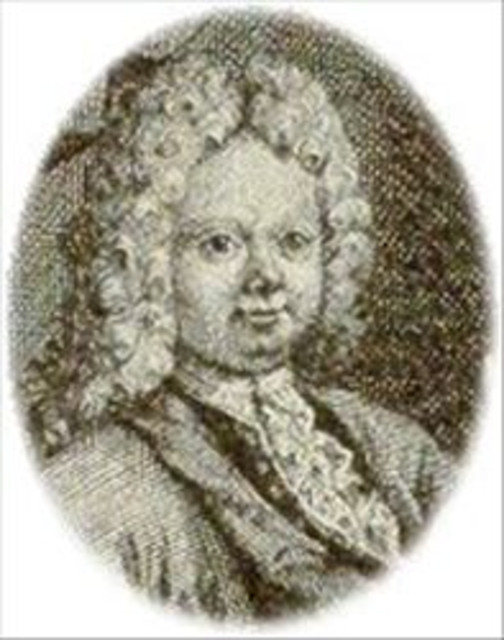
Much of what is known about Alessandro Marcello comes not from his few compositions, but from his professional career and social activities as a member of Venice's nobility. Both he and his more famous brother Benedetto studied law and were members of the city-state's high council. Alessandro was educated at the Collegio di S. Antonio, then joined the Venetian Arcadian society, the Accademia degli Animosi in 1698, and served the city as a diplomat in the Levant and the Peloponnese in 1700 and 1701. After returning to Venice, he took on a series of judiciary positions while dabbling in a number of creative endeavors. He was responsible for paintings found in the family palaces and parish church and, after joining the literary society, the Accademia della Crusca, published eight books of couplets, Ozii giovanili, in 1719. That same year, he was named head of the Accademia degli Animosi, and as such, he did much to expand its collection of musical instruments, many of which are now in Rome's National Museum of Musical Instruments. Marcello's compositional output is small, consisting of not much more than a dozen each of chamber cantatas, violin sonatas, and concertos. Most of his works were published under the pseudonym "Eterio Stinfalico," which is one of the reasons why it wasn't known until the mid-twentieth century that Bach's Keyboard Concerto in D minor, BWV 974, was a transcription of Marcello's Oboe Concerto in D minor, and even so, both the Bach and the Oboe Concerto are still often attributed to Benedetto Marcello. His cantatas dealt primarily with pastoral subjects and contained topical references, and, befitting his station in society, were clearly intended for Venice's and Rome's best singers, including Farinelli, Checchino, Laura and Virginia Predieri, and Benedetto's student, Faustina Bordoni. His instrumental works reflect a knowledge and understanding of the differences in French, Italian, and German music of the time, including choices of instruments for both the solo and continuo parts and use of ornamentation. Of all of his works, what is best known is the Adagio from the Oboe Concerto, which has become a staple of wedding music collections.
First discovered Aug 17, 2026, 6:45 PM