Take 6
Charts
Tracks
Playlists
SEO
Press Mentions
Overview
Not included in any known risky playlists
Monthly Listeners
Discography
Genres
Spotify has not assigned genres to this artist yet
Top Audiences
Top Listener Locations
 São Paulo, BR1,490
 Chicago, US1,322Los Angeles, US1,306
 Johannesburg, ZA1,283
 London, GB1,279
Playlist Summary
Playlist Movement
No activity found
This artist's playlist additions and removals will appear here.
Biography & Metadata
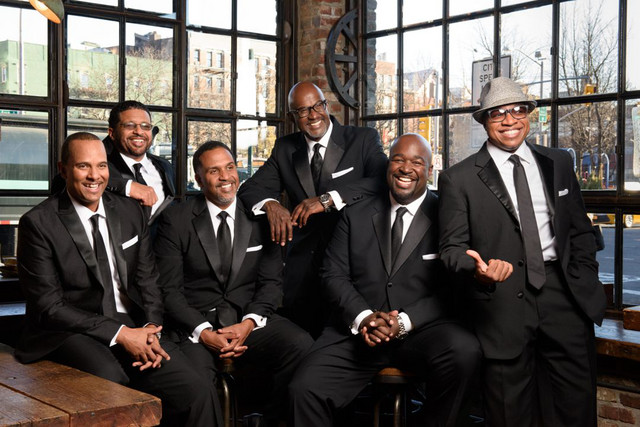
With roots in gospel, doo wop, and sophisticated jazz-influenced singing groups of mid-century America, the a cappella group Take 6 are a throwback to an earlier era of American music, and they were a precursor for a number of Black male pop groups of the '90s, most notably Boyz II Men. The group's membership includes Alvin Chea, Khristian Dentley (who replaced Cedric Dent in 2011), Mark Kibble, Claude V. McKnight III (brother of Brian McKnight), Joey Kibble (who replaced Mervyn Warren in 1991), and David Thomas. Kibble and McKnight caught the a cappella bug at Alabama's Oakwood College in the early '80s, forming a vocal group that solidified into Take 6 when singer/arranger Warren joined in 1985. They signed to the Warner Alliance label, for which they made a pair of smooth yet vocally adventuresome albums that defied pigeonholing other than the all-purpose a cappella classification. Take 6 (1988) won jazz and gospel Grammy awards, took three Dove awards, went platinum, and led to contributions to Spike Lee's blockbuster film Do the Right Thing and Quincy Jones' extremely successful Back on the Block. Like the debut, So Much 2 Say (1990) pulled off the remarkable feat of hitting Billboard's overall, R&B, jazz, and gospel charts with Top Ten placements in the latter two. After that hot beginning, the group shifted over to Reprise, another Warner-distributed imprint, and delivered six additional albums -- including a live recording and a pair of holiday releases -- through the early 2000s. They continued to combine genres and mixed traditional and original material. Although their releases didn't sell as well as the debut and follow-up, the group continually added to their collection of Grammy and Dove awards. They utilized instrumental backing, beginning with Join the Band (1994), and Brothers (1996), which indicated a sharper turn toward commercial R&B, though the group did so while retaining their identity. After Beautiful World (2002), released on Warner Bros. proper, Take 6 went independent. Among their more notable later releases were The Standard (2008), which featured appearances from George Benson, Roy Hargrove, and Aaron Neville, and One (2012), highlighted by a collaboration with Stevie Wonder. They later signed with SoNo for Believe (2016), produced by label vice president and industry veteran Ross Vannelli. ~ Richard S. Ginell & Andy Kellman, Rovi
First discovered Aug 23, 2026, 9:09 PM