William Billings
Charts
Tracks
Playlists
Press Mentions
Google Rankings
Overview
Not included in any known risky playlists
Monthly Listeners
4,501 – 4,547
Discography
Genres
Spotify has not assigned genres to this artist yet
Top Audiences
Top Listener Locations
 Ann Arbor, US94Chicago, US92New York City, US79Philadelphia, US72Minneapolis, US71
Playlist Summary
Playlist Movement
Event | Playlist | Botted? | Position | Track | Happened at | |
|---|---|---|---|---|---|---|
Biography & Metadata
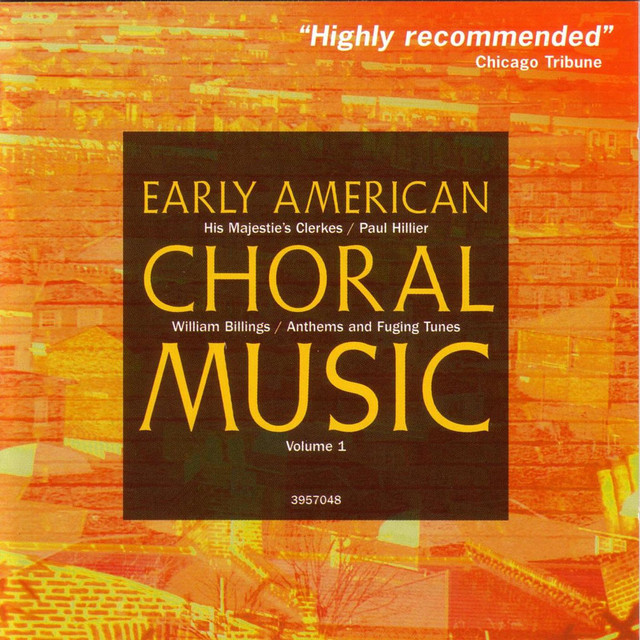
William Billings was the first significant home-grown American composer. He was from a poor family, had little formal education, and was self-taught in music aside from some possible lessons from Boston choirmaster John Barry. In 1760 he apprenticed himself to a tanner and practiced that craft for much of his life. In 1769 he became a partner to Barry in teaching choral singing in Boston. In 1774 Billings taught for a while in Stoughton, MA, and Providence, RI, but for the rest of his life worked in Boston. His interest in music distracted him from his tannery, causing him regular financial difficulties. At one point he was described as being "of moderate size, short of one leg, with one eye, without an address, and with an uncommon negligence of person." Nevertheless, he got several teaching positions, which he carried out at various churches. In 1770 he published a collection called The New England Psalm Singer. This was the first publication comprising American music exclusively, and was also the first by a single American composer. In it he introduced a genre that he did not invent but that would become almost exclusively associated with him: the "fuging tune," a canon-like vocal piece that does not follow the academic rules of a true fugue. (In the twentieth century Henry Cowell wrote numerous pieces and individual movements in the same form, as a tribute to Billings.) With typical immodesty, he described them as "twenty times as powerful as the old slow tunes." Thus, he was surprised when the collection was attacked as being rather tame. His new collection The Singing Master's Assistant, (known popularly as "Billings' Best") was published in 1778 and became very popular. It included a number of strange, original ideas, including a piece called Jargon, with such odd dissonances that someone hung two cats by their tails on his shop's shingle in protest. Nevertheless, this volume became his most popular one, going through several editions. Part of the reason was that it contained several effective Revolutionary songs, including the march perennial Chester" and "Lamentation over Boston," with words by Samuel Adams. However, his next four publications were less popular, and did not go into extra editions during his lifetime. This is even true of his finest collection, The Continental Harmony, which shows more variety and more use of larger forms. Most of his music is written for unaccompanied voices. He wrote only one piece with a separate organ part, an anthem that was performed at Boston's First Church as part of a celebration of the installation of its new organ. The Congregational Church, at which his compositions were aimed, had not used organs, and the issue of organ music in search was still very controversial among church leaders at the time. Billings himself left vague writings approving discreet use of an organ or a small gallery orchestra with his compositions. The instruments might have been intended to keep the singers on pitch; Billings was, in fact, the first choral conductor to use a pitch pipe to tune his chorus.
First discovered Aug 21, 2026, 6:02 AM