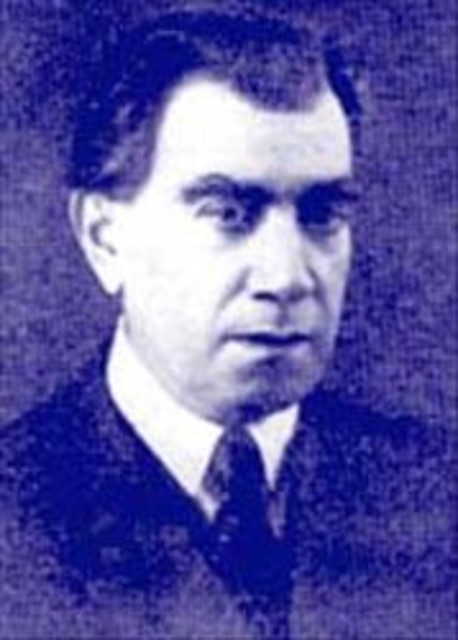
Reinhold Glière
Charts
Tracks
Playlists
SEO
Press Mentions
Overview
Not included in any known risky playlists
Monthly Listeners
Discography
Genres
Spotify has not assigned genres to this artist yet
Top Audiences
Top Listener Locations
 London, GB632
 Sydney, AU520
 New York City, US520Los Angeles, US490Chicago, US439
Playlist Summary
Playlist Movement
No activity found
This artist's playlist additions and removals will appear here.
Biography & Metadata
Although all of his important compositions came during the first half of the twentieth century, the body and style of his work place Glière solidly at the end of the nineteenth century in spirit. Having studied at both the Kiev and Moscow conservatories, he was infused with Russian Romanticism, and -- even though he studied briefly in Berlin -- it is safe to say that nothing he ever wrote sounded either modern or un-Russian. He studied theory under a student of Rimsky-Korsakov and, upon entering the Moscow Conservatory in 1894, studied composition and harmony with the likes of Arensky, Taneyev, and Ippolitov-Ivanov. In 1900 he was awarded the school's highest prize in composition, the gold medal. His monumental third symphony, subtitled "Ilya Murometz," which premiered in Moscow in 1912, propelled his career forward; in 1913 he was named director of the Kiev Conservatory, a position he held all through the Russian Revolution. In 1920 he became professor of music at the Moscow Conservatory; his service there was interrupted only by the Second World War. While in Moscow, he taught Serge Prokofiev, Aram Khachaturian, and Alexander Mossolov, the spearhead of "Soviet realism." Glière also became a political figure in Russia during the Stalin years, serving as chairman of the organizing committee of the Soviet Composers' Union from 1938 to 1948. His conventional, utterly Russian music found favor with Stalin and his cultural ministers; the extent to which Glière's reputation as a musician may have suffered because of this will forever remain speculative. Glière received many honors during this era, including the title of People's Artist of the Soviet Union. Glière's body of work -- which straddles the upheaval of the Russian Revolution, with fine pieces produced on both sides -- is prodigious in quantity: besides his three symphonies, four string quartets, two complete operas, two ballets, and two concertos, he produced hundreds of songs, piano works, and chamber pieces. He is considered, along with his more famous predecessor, Tchaikovsky, to have been seminal in the development of Russian ballet; however, little of his music is heard outside Russia today. Glière's music is comfortably Romantic, invariably nationalistic, and skillfully crafted, often managing to combine beautiful melodies, inventive orchestration, and eye-popping bombast to great effect.
First discovered Aug 21, 2026, 4:05 PM