Umberto Giordano
Charts
Tracks
Playlists
Press Mentions
Google Rankings
Overview
Not included in any known risky playlists
Monthly Listeners
Discography
Top Audiences
Top Listener Locations
 Mexico City, MX2,354
 Madrid, ES1,818
 Santiago, CL1,463
 London, GB1,240Barcelona, ES1,098
Playlist Summary
Playlist Movement
Event | Playlist | Botted? | Position | Track | Happened at | |
|---|---|---|---|---|---|---|
Biography & Metadata
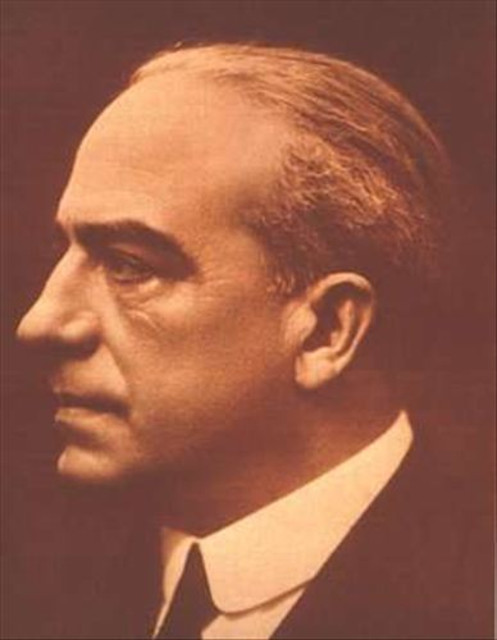
Umberto Giordano was born the son of a pharmacist who was against his son pursuing a career in music; the budding composer therefore learned the beginnings of his craft surreptitiously from Gaetano Briganti, a local maker of mechanical instruments. In 1880, Giordano's father finally lifted his objections, and Giordano entered the Naples Conservatory, where he studied somewhat irregularly until 1890. When Giordano was unable to attend at the Conservatory, he worked as a stagehand at the Teatro Dauno in Foggia. In 1889 Giordano entered the Sonzogno Competition with his first one-act opera, Marina, which he had composed on a libretto purchased for only 25 lire. Marina placed sixth in the competition, and it earned the composer an invitation to play the score for the publisher Sonzogno personally -- a compositional audition. When Giordano had finished playing the work, Sonzogno told him "I will not publish this opera, as I do not like the libretto. But I will engage you in a contract for a new work." The agreement resulted in Mala vita, perhaps the grimmest verismo opera attempted to that point on the Italian stage. It was well received, especially in German-speaking countries, but a riot broke out at the work's premiere in Naples. In 1902, Giordano softened the dramatic edges of Mala vita and restaged it successfully in Naples as Il Voto. Giordano's second opera, Regina di Diaz, was a certifiable flop, and Sonzogno threatened Giordano with a severance of contract. However, having unwittingly rescued the composer Pietro Mascagni from a tram accident in early 1896, Giordano was heartily repaid when Mascagni went to Sonzogno to argue on his behalf. This second chance resulted in what has become the composer's most famous work, Andrea Chénier (premiered March 28, 1896). Its libretto, drawn from events of the French Revolution, gave the initial producers pause, since political unrest was then high in Italy, and the work's effect on audiences was uncertain. But the work was greeted with huge enthusiasm, thanks in no small part to tenor Giuseppe Borgatti, who created the role of Andrea. The "Improvisation" and the aria, "La mamma morta," have remained popular excerpts. The emergence of Giordano's next principal opera, Fedora, coincided with the appearance of yet another unknown tenor, Enrico Caruso; their mutual success gave rise to the saying, "Fedora made Caruso, and Caruso made Fedora." Giordano later claimed he had coached Caruso for the work using a cylinder phonograph to point out flaws in the voice; as Giordano once said, "I made a new Caruso out of him." While Caruso went on to the most brilliant career of any Italian tenor, the opera that "made" him is given to only infrequent revival. Giordano went on to write more operas, but these did not enter the repertory. Notable among these efforts are: Siberia (1904), a huge, but not lasting success; Madame Sans-Gene (1915), which opened at New York's Metropolitan Opera with Geraldine Farrar in the lead role; Le cena della befe (1924), which marked Giordano's later turn away from the verismo style; and Il re (1929), in which Giordano broke completely with verismo, creating instead a light comedy that remained popular on European stages through the 1930s. Aside from his operas, Giordano composed a considerable number of orchestral and chamber works, as well as one ballet, L'astro magico (1928). Giordano took a great deal of interest in recording technology, and helped found the Discoteca di Stato in Rome -- the main Italian archive for historical recordings. Umberto Giordano died in Milan at the age of 81.
First discovered Aug 17, 2026, 8:47 PM