Fred Wesley
Fred Wesley
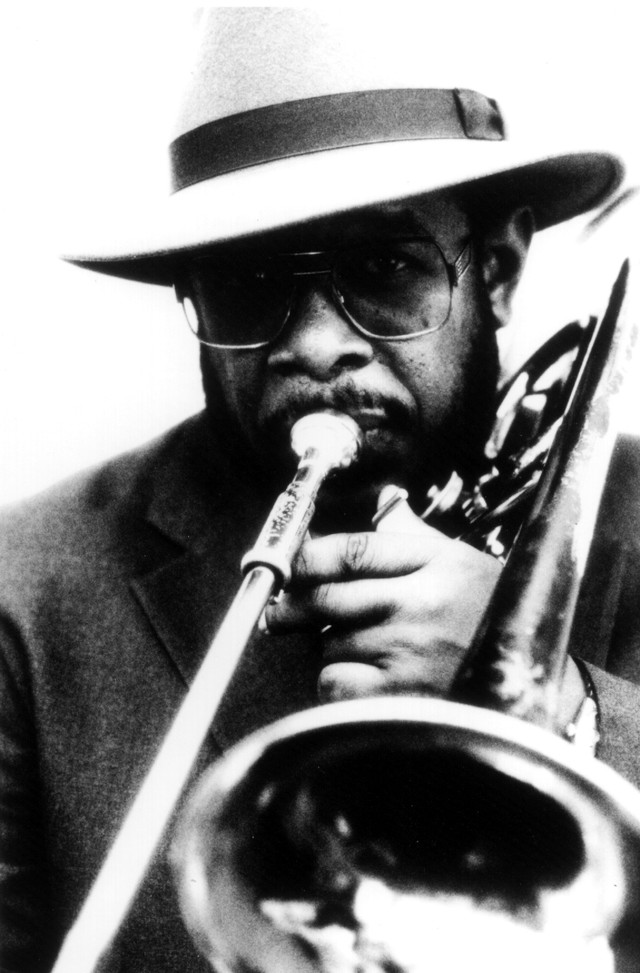
artist

Fred Wesley

Playlist Risks
Listeners
845,475/mo
Total Streams
135,269,852
Followers
54,851
Est. Royalties
$1,719 - $6,877/mo

Charts

Tracks

Playlists

SEO

Press Mentions

Overview

Monthly Listeners

Discography

Their catalog as it appears on their public Spotify artist profile
11
Albums
0
EPs
2
Singles
135,269,852
Total Streams

Top Audiences

Top listener locations as determined by Spotify

Top Listener Locations

CLSantiago, CL15,622
MXMexico City, MX14,287
BRSão Paulo, BR12,877
GBLondon, GB12,171
PELima, PE8,498

Playlist Summary

Overview of this artist's relationship with playlists
2,594
Playlist adds
0
High-risk playlist adds
681,774
Playlist follower reach (sum)
4,350+
Listeners from playlists
Estimated
0.5%
Of listeners from playlists
Estimated

Playlist Movement

Recent playlist add/remove events for this artist

No activity found

This artist's playlist additions and removals will appear here.

Biography & Metadata

As the longtime musical director for soul legend James Brown's renowned backing unit the J.B.'s, trombonist Fred Wesley was the world's most famous sideman, orchestrating the sinuous grooves and contributing the bold, surgically precise solos that defined the language of funk. Born July 4, 1943, in Columbus, Georgia, Wesley was raised in Mobile, Alabama. At age three, he studied classical piano under his grandmother, a music teacher, but much preferred the big-band music played by his father, Fred Wesley, Sr., who also chaired the music department at Mobile Central High School. Wesley, Jr. remained with the piano until middle school, first adopting the trumpet before moving to the trombone. He made his professional debut at age 12 in a big band led by his school's music teacher, E.B. Coleman, and soon was sitting in with local R&B acts as well. While studying music at Alabama State University, Wesley briefly tenured with the Ike & Tina Turner Revue as well as Hank Ballard & the Midnighters before serving in the U.S. Army, playing with the 55th Army Band and graduating from the Armed Forces School of Music. After returning from military duty in 1967, Wesley formed his own project, the Mastersound, fusing R&B with hard bop. The group splintered within a year, however, and when he received a phone call from J.B.'s trumpeter Waymon Reed, who told him Brown was seeking a new trombonist, Wesley accepted the offer. Brown's infamously dictatorial approach wore greatly on Wesley, and the two men clashed often. After appearing on landmark singles including "Say It Loud (I'm Black and I'm Proud)," "Licking Stick," and "Mother Popcorn," the trombonist even quit the J.B.'s in late 1969, briefly gigging with Sam & the Goodtimers before returning to Brown's camp in early 1971 and assuming the role of musical director and arranger. Wesley's contributions to classic funk outings including Black Caesar, Slaughter's Big Rip-Off, and The Payback cannot be overstated: alongside bandmates including Maceo Parker and Bootsy Collins, he spearheaded Brown's groundbreaking transformation from soul to funk, establishing the template for the R&B of a new decade. "I completed [Brown's] creations, I followed his blueprints," Wesley later said. "He would give me horn things to write, but sometimes maybe it would be incoherent musically and I would have to straighten it out, so to speak. When it came out of my brain, it would be a lot of James Brown's ideas and my organization." Wesley even wrote a handful of Brown hits including "Doin' It to Death" and "Papa Don't Take No Mess," and headlined several J.B.'s records including the classic Damn Right I Am Somebody and Breakin' Bread. But creative and financial differences again forced him to part ways with Brown in 1975, this time for good. Wesley signed on with George Clinton's Parliament-Funkadelic in time for their seminal Mothership Connection LP. And unlike Brown, Clinton encouraged his collaborators to pursue their own projects, even co-writing most of the songs featured on the trombonist's 1977 official solo debut, A Blow for Me, a Toot for You, credited to Fred Wesley & the Horny Horns. After a second solo disc, 1979's Say Blow by Blow Backwards, Wesley exited the P-Funk sphere to return to his first love: jazz. He joined the Count Basie Orchestra, and also moonlighted as a producer, helming the self-titled debut LP by R&B group Kameleon. After settling in Hollywood in 1981, Wesley assumed the role of hired gun, playing on studio sessions headlined by Earth, Wind & Fire, Barry White, and the Gap Band, and also arranged records by Curtis Mayfield and Terry Callier. He re-ignited his solo career with 1990's jazz date New Friends, and continued recording straight-ahead jazz LPs throughout the decade to follow. As his unmistakable syncopated style became a crucial component of hip-hop via endless sampling of his vintage James Brown sides, Wesley also toured with fellow Brown alums Maceo Parker and Pee Wee Ellis as the JB Horns before forming his own Fred Wesley Group in 1996. In 2002 he published his memoirs, Hit Me, Fred: Recollections of a Sideman. Wesley followed it with a new album, With a Little Help from My Friends, in 2010 from BHM Records. He concurrently served as an adjunct professor of jazz studies at the University of North Carolina at Greensboro. Wesley continued to tour through the 2010s, and in 2015 he released a joint album with Leonardo Corradi and Tony Match called Generations. ~ Jason Ankeny, Rovi

Updated Sep 3, 2026, 4:24 PM
First discovered Aug 15, 2026, 3:26 PM