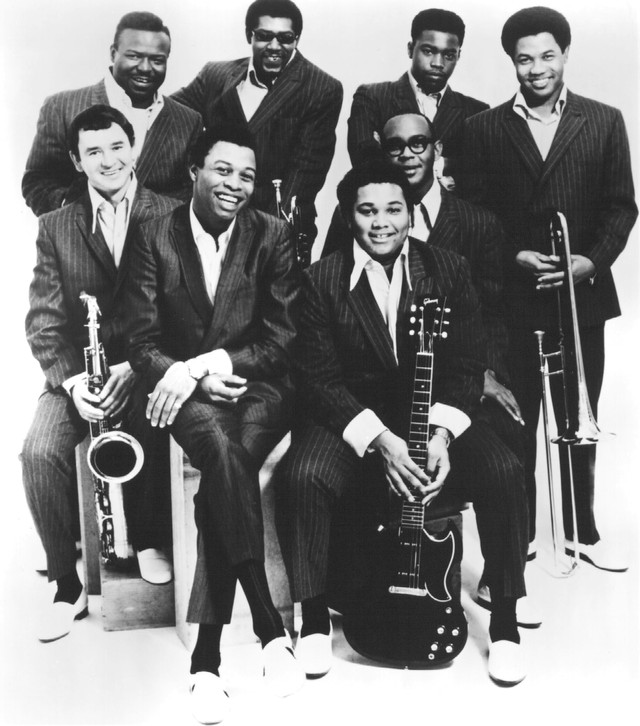
Charles Wright & The Watts 103rd Street Rhythm Band
Charts
Tracks
Playlists
SEO
Press Mentions
Overview
Not included in any known risky playlists
Monthly Listeners
Discography
Top Audiences
Top Listener Locations
 London, GB13,005
 Sydney, AU6,721Melbourne, AU6,405
 São Paulo, BR6,357
 Los Angeles, US4,686
Playlist Summary
Playlist Movement
No activity found
This artist's playlist additions and removals will appear here.
Biography & Metadata
Famed for their oft-sampled 1970 classic "Express Yourself," Charles Wright & the Watts 103rd Street Rhythm was among the pivotal forces behind soul music's metamorphosis into funk. Wright was born in Clarksdale, MS, in 1940; his family relocated to Los Angeles a dozen years later, and there he began performing with a number of local doo wop groups, eventually becoming a protégé of singer Jesse Belvin. After learning to play guitar, Wright formed a band dubbed the Wright Sounds with bassist Melvin Dunlap, saxophonist Big John Rayford, and drummer James Gadson; in time, the lineup also grew to include guitarist Al McKay, trombonist Raymond Jackson, saxophonist Bill Cannon, and trumpeter Gabriell Flemings. As the Soul Runners, the group scored a 1967 hit with the instrumental "Grits and Cornbread"; rechristened the Watts 103rd Street Rhythm Band, they scored again later that same year with another instrumental, "Spreadin' Honey," and with the support of comedian Bill Cosby (whom they'd previously backed in the studio) were signed to Warner Bros. soon after. With their self-titled 1968 debut LP, the Watts 103rd Street Rhythm Band outlined the pioneering sound which they perfected over the series of records which followed -- renowned for their loose, improvisational performances, the group bridged the gap between the proto-funk explosiveness of James Brown and the earthy Southern grooves of the Stax/Volt stable, topped off by Wright's incantatory vocals. Many of their songs were improvised in the studio or on stage, among them their first major pop hit, 1969's "Do Your Thing." 1970's Express Yourself was the Watts 103rd Street Rhythm Band's creative peak, generating not only the insistent title smash but also the gorgeous ballad "Tell Me What You Want Me to Do." After one more hit, "Your Love (Means Everything to Me)," the group splintered in the wake of 1971's You're So Beautiful, and Wright continued on as a solo artist, scoring his lone chart entry with the title track to 1973's Doin' What Comes Naturally. After an extended absence from performing, he formed a new Watts 103rd Street Rhythm Band and released Going to the Party in 1998. ~ Jason Ankeny, Rovi
First discovered Nov 4, 2025, 5:01 PM